Wisdom
The stones
Filter by price
Virtues:
- Abundance 114
- Acceptance 64
- Anchoring 137
- Balance 318
- Be brave 129
- Calm 148
- Chance 69
- Clairvoyance 64
- Clarity 147
- Communication 139
- Compassion 77
- Concentration 106
- Creativity 138
- Energy 161
- Harmony 185
- Healing 137
- Intuition 219
- Joy 136
- Letting go 107
- Love 191
- Patience 30
- Peace 217
- Positivity 118
- Protection 260
- Purification 266
- Reconciliation 68
- Sleep 84
- Spirituality 230
- Strength 204
- Sweetness 96
- Trust 398
- Vitality 134
Materials:
- 925 sterling silver 8
- Brass 17
- Gold 11
- Gold-plated 1
- Natural Stones 159
- Silver 36
- Steel 24
- Synthetic leather 1
Showing 121–160 of 188 results
Amethyst Pendant
CHF 15 – CHF 34Price range: CHF 15 through CHF 34Amethyst Heart Pendant
CHF 29 – CHF 48Price range: CHF 29 through CHF 48Gold-Plated Amethyst Heart Pendant
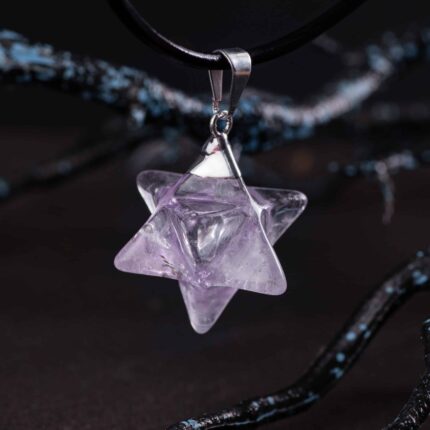
CHF 29 – CHF 48Price range: CHF 29 through CHF 48Merkaba Amethyst Pendant
CHF 39 – CHF 58Price range: CHF 39 through CHF 58Merkaba Amethyst Gold-Plated Pendant
CHF 39 – CHF 58Price range: CHF 39 through CHF 58
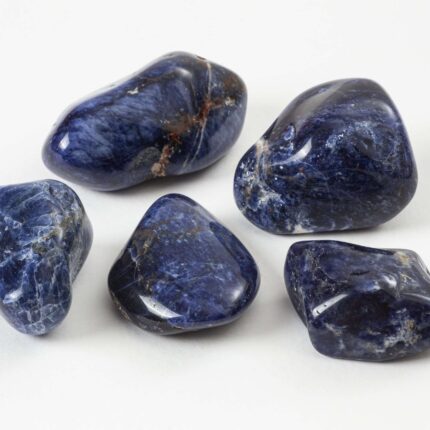
Tumbled sodalite stone
CHF 1 – CHF 8Price range: CHF 1 through CHF 8
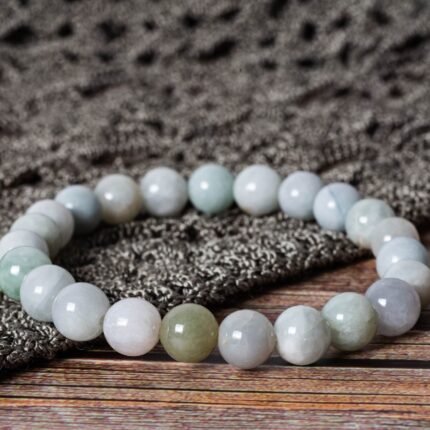
6mm White Jade Bracelet
CHF 20 – CHF 25Price range: CHF 20 through CHF 25
8mm White Jade Bracelet
CHF 25 – CHF 29Price range: CHF 25 through CHF 2910mm White Jade Bracelet
CHF 35 – CHF 39Price range: CHF 35 through CHF 39Discover our other gemstones
Origin and varieties of amethyst
Amethyst is a semi-precious stone formed in cavities within volcanic rock through the crystallisation of silicon dioxide. It belongs to the quartz family. Traces of iron give it its characteristic purple colour. Its name derives from the ancient Greek ‘amethystos’, meaning ‘not drunk’. A popular belief held that it protected against drunkenness. Its main deposits are found in Brazil, Uruguay, Zambia, Russia, Madagascar and Mexico.
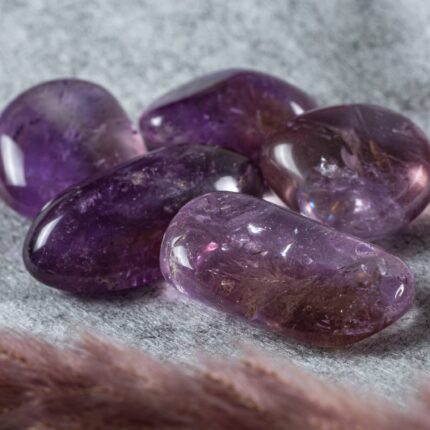
In its raw state, it is found in the form of geodes or druses lining the interior of rock cavities, with a rough outer surface and an interior composed of crystals. Its hues range from pale violet to deep violet, sometimes featuring pinkish or bluish undertones.
The source also plays a significant role in the quality and colour of this gemstone. Among the most prized specimens are those from Uruguay, which are renowned for their deep, luminous purple colour. There are various types of amethyst, each with specific inclusions that influence their appearance: chevron, lavender, ametrine, cacoxenite, etc.
History and symbolism of the amethyst
With its characteristic violet hue, amethyst has inspired beliefs and the arts across many cultures and traditions. It was formerly regarded as a precious stone, but the discovery of vast deposits in Brazil in the early 20th century led to it losing this designation.
Since ancient times, this gemstone has been valued for its appearance and its properties. The oldest known deposits to date are located in Egypt (Wadi el-Hudi). Inscriptions found on stelae at this site associate the goddess Hathor, known as the ‘Lady of Amethyst’, with the protection of this place.
The Greeks and Romans believed it prevented drunkenness and excess. They carved it into wine cups and made talismans from it to promote clarity of mind. The Romans also associated it with military strength and good fortune in commercial ventures.
In Christian tradition, this gemstone is associated with humility and devotion. It is mentioned in the Bible as one of the stones adorning the breastplate of the high priest of Israel and the foundations of the heavenly Jerusalem. In the Middle Ages, amethyst was regarded as a symbol of purity and spirituality. It adorned the liturgical vestments of bishops and was used in religious practices. Medieval healers attributed healing properties to it, particularly for mental disorders and cases of poisoning.
In alchemy, it holds a special symbolic place due to its violet colour, which is associated with transmutation, purification and the balance between the material and the spiritual. It symbolises the union of opposites (the red of sulphur and the blue of mercury) necessary for the completion of the Great Work.
In Renaissance Europe, the amethyst symbolised royalty and spirituality. It was incorporated into the crowns and jewellery of monarchs, reflecting not only their power but also their wisdom and their connection to the divine. It also adorned the pastoral rings of Vatican bishops right up until the 1960s.
Nowadays, this gemstone is still prized for its aesthetic and symbolic qualities. It is used in jewellery, works of art and crystal healing, where it is believed to have properties that soothe the mind, promote sleep and enhance concentration.
Properties and Crystal Healing of Amethyst
Amethyst is a semi-precious stone valued for its therapeutic properties. It is often used in crystal healing for its beneficial effects on emotional, physical and spiritual balance.
Emotional Balance:
-
Relief from stress and anxiety: It is often used to calm disruptive emotions, reduce stress and alleviate anxiety. By promoting a state of deep relaxation, it helps manage emotional tension and restore inner balance. It is particularly useful during periods of high pressure.
-
Inner Healing: Also known for promoting emotional harmony and helping to overcome past emotional trauma, it supports the process of inner healing by releasing negative energies, offering support during times of grief, sorrow or confusion. It is often seen as a stone that helps restore emotional stability, bringing clarity and peace.
Physical Well-being:
-
Improved sleep quality: This gemstone is used to promote restful sleep. Placing a piece of amethyst under your pillow or near your bed may improve the quality of your sleep, help combat insomnia and ward off nightmares.
-
Headaches: Due to its relaxing effect on the mind and emotions, it can relieve and ease muscle tension in the upper back. It can therefore help to soothe certain types of headaches.
Spiritual Harmony:
-
Mental clarity and heightened intuition: Renowned for promoting mental clarity and aiding decision-making. It is also considered a stone for developing intuition, which can help foster a better understanding of oneself and of situations. It is said to be particularly useful for stimulating concentration and meditation, thereby enabling one to reach deeper states of consciousness.
-
Energetic Protection and Calm: It can also be used as a shield against negative energies. It brings a sense of calm and inner peace by reducing stress and anxiety. It is used to balance emotions and facilitate the process of spiritual and emotional healing by soothing disturbing thoughts.
Effect on the Chakras:
| Crown Chakra (Sahasrara) | Amethyst is particularly beneficial for the crown chakra, which is located at the top of the head. This chakra is associated with spirituality, wisdom and connection with the universe. It promotes elevation and meditation. It helps to open the mind to higher consciousness and spiritual guidance. |
| Third Eye Chakra (Ajna) | Amethyst is also associated with the third eye chakra, situated between the eyebrows, which is linked to intuition, inner vision and mental clarity. By working on this chakra, it strengthens intuition, improves perception and facilitates meditative states. It is used to develop clairvoyance and a connection with the subtle realms. |
How can amethyst be combined with other semi-precious stones?
Combining stones in crystal healing is a useful way to amplify their properties and work at a deeper level. It is essential to pair crystals that are compatible with one another in order to make the most of their benefits. Here are a few ideas for combining amethyst with other stones:
-
Amethyst & Rose Quartz: This combination is ideal for fostering unconditional love and emotional harmony. Rose quartz is associated with the heart chakra and love, whilst amethyst brings clarity and spiritual protection. Together, they promote a balance between emotions and spirituality, whilst helping to open the heart.
-
Amethyst & Agate: Agate is a stone of grounding and balance used to stabilise emotions and provide a sense of security. It helps to ground spiritual energies in the physical reality. This combination is useful for those seeking to balance their spiritual development.
-
Amethyst & Citrine: The combination with citrine, which stimulates joy, creativity and abundance, creates an ideal synergy between emotional balance and positive energy. This combination fosters optimism whilst providing protection against negative energies. Together, they create a space conducive to healing and prosperity. Ametrine naturally contains both of these minerals.
-
Amethyst & Aquamarine: Aquamarine is used to soothe emotions and encourage self-expression. Together, they enhance mental clarity and the ability to express oneself calmly and thoughtfully. They help to release emotional tension by facilitating open and harmonious communication.
-
Amethyst & Lapis Lazuli: Lapis lazuli is associated with the concepts of wisdom and clairvoyance, as well as the third eye chakra. This combination enhances intuition and receptivity, enabling one to uncover profound truths. Together, they promote mental clarity and spiritual understanding.
Care and Use of Amethyst
Purification and Recharging:
It is important to cleanse and recharge your amethysts regularly so that they retain their energetic properties.
Cleansing: You can cleanse it simply by gently rinsing it under a trickle of cold water and leaving it to air-dry. For a deeper cleansing, place it on a bed of salt for several hours (for example, overnight).
Recharging: Amethyst is best recharged in moonlight, particularly on nights when there is a full moon or a waxing moon. You can also recharge it by placing it on a Flower of Life or a cluster of quartz. Avoid exposing it to direct sunlight, which could cause its colour to fade.
Care:
Cleaning: Clean your jewellery or crystals with lukewarm water and mild soap. Use a soft-bristled brush to gently remove dirt, particularly from geodes. Avoid harsh chemicals that may damage the stone.
Protection against knocks and scratches: Although relatively hard-wearing, it can become scratched or chipped if it comes into contact with harder objects. Store your jewellery separately to avoid scratches and protect it from heavy knocks.
Exposure to light and heat: This gemstone is sensitive to light and heat. Prolonged exposure to intense sunlight can alter its colour and lustre. Keep it away from direct light when not in use.
How to use amethyst:
Meditation: It is ideal for meditation, as it promotes mental clarity, calms the mind and stimulates intuition. You can hold it in your hands or place it on your third eye chakra during your sessions to deepen your practice and achieve a state of deep relaxation.
Harmonisation: You can use your geodes and druses to purify and recharge your other minerals. Simply place them on top of the geodes or druses overnight.
In jewellery: When worn as jewellery, it blends easily with various clothing styles and complements many colours. The faceted cut adds light and elegance. It is particularly well-suited to more sophisticated outfits.
Decoration: Used as decoration in the form of geodes, druses or polished stones, it brings a soothing energy to your space. It creates a serene and harmonious atmosphere, ideal for relaxing or recharging your batteries.
Feng Shui and Well-being: In Feng Shui, it is often placed in areas designated for meditation or rest to promote peace and spirituality. It can also be displayed near the bed to improve the quality of sleep, or in workspaces to stimulate concentration and protect against negative energies.
Mineralogy and Composition of Amethyst
Amethyst is a macrocrystalline variety of quartz, recognisable by its characteristic violet hue, which is due to the presence of trace amounts of iron and natural radiation during its formation. Like all varieties of quartz, it belongs to the silicate group and is distinguished by its hexagonal crystal structure. It is primarily composed of silicon dioxide (SiO₂), a composition that gives it its hardness and durability.
| Group / family | Quartz |
| Subgroup | Macrocrystalline quartz |
| Chemical class | Silicate |
| Subclass | Tectosilicate |
| Chemical formula | SiO₂ |
Formation:
Amethyst forms in cavities within volcanic rocks (geodes) or in silica-rich hydrothermal veins. During its formation, iron ions (Fe³⁺) are incorporated into the crystal structure, and natural ionising radiation transforms these ions, thereby producing the violet colour. The colour may vary depending on the concentration of iron and the intensity of radiation exposure. Amethysts are frequently found as pointed crystals within geodes, often associated with other forms of quartz such as rock crystal, smoky quartz or agates.
| Main component | Silicon dioxide (SiO₂): Amethyst is primarily composed of silicon dioxide, the same compound as quartz. This structure is the basis of its hardness and durability. |
| Impurities and inclusions | Iron (Fe³⁺): Responsible for the characteristic violet colour. |
| Manganese (Mn): May influence the intensity of the violet colour. | |
| Natural radiation: Stabilises the stone’s colour. |
Physical Properties of Amethysts
| Hardness and durability | Mohs scale: 7, which makes amethyst resistant to scratches from most materials, but susceptible to severe impact.
Impact resistance: Moderate; may chip if struck with force. |
| Refraction of light | Refractive index: Its refractive index ranges from 1.544 to 1.553. This property influences the way light passes through and interacts with the stone, contributing to its brilliance. |
| Birefringence: Amethyst exhibits low birefringence, with an index ranging from 0.009 to 0.010, meaning it slightly splits the light passing through it. | |
| Density | Specific gravity: Approximately 2.65, similar to that of quartz. This density contributes to the stone’s sense of weight when held in the hand. |
Transparency and appearance:
Transparency: Transparent to translucent.
Colours and patterns: A range from pale lilac to deep purple, sometimes with shades of red or blue. Some specimens may feature veins of agate or quartz.
FAQs about Amethyst
👉 How much does a natural amethyst cost?
Amethysts are natural stones, often referred to as semi-precious stones, and are relatively common. Prices vary depending on quality, colour and how they have been cut or polished. A small tumbled stone (1cm–3cm) costs a few francs, whilst a pendant featuring a cut stone set in a precious metal (silver, gold) can cost up to a hundred francs. Geodes are generally sold by weight and quality. They can be worth several thousand francs. For a raw geode weighing around 4 kilos, expect to pay around 500 francs. Generally, the more intense the colour of the stone and the more transparent it is (without inclusions), the higher the price will be.
👉 What is the significance of amethyst?
Known as the Stone of Wisdom, amethyst is recognised for its soothing and spiritual properties. On an emotional level, it promotes serenity, reduces stress and helps to balance emotions. Physically, it is reputed to improve sleep, relieve headaches and promote muscle relaxation. In crystal healing, it is associated with the crown chakra: strengthening intuition, meditation and spiritual connection. Thanks to its purifying energies, it protects against negative energies and promotes mental clarity. Its violet colour soothes the mind, making it an ideal stone for restoring calm and balance in everyday life.
👉 Which chakra is associated with amethyst?
Amethyst is primarily associated with the crown chakra (Sahasrara), located at the top of the head. This chakra is linked to spirituality, connection with the divine and the elevation of consciousness. By harmonising this chakra, it promotes meditation, intuition and open-mindedness. It helps to calm the mind, dispel negative thoughts and achieve a state of inner peace. It is also linked to the third eye chakra (Ajna), enhancing mental clarity, concentration and intuition. This stone is ideal for those seeking to deepen their spiritual practice or personal development.
👉 How do you cleanse and recharge an amethyst?
To benefit from the energies of amethyst, it is essential to purify and recharge it regularly. To purify it, rinse it under cold water for a few minutes or place it on a bed of salt for several hours (overnight, for example) to remove any accumulated energies. To recharge it, expose it to moonlight during the waxing phase. The best time for recharging is during the full moon, as this promotes release and transformation. Avoid direct sunlight, which can cause it to lose its colour. You can also use a selenite Flower of Life or a cluster of quartz crystals.
👉 Is amethyst sensitive to light or heat?
Yes, amethyst is sensitive to light and heat. If you wish to display a druse or a geode in your home, make sure to place it somewhere out of direct sunlight! Prolonged exposure to direct sunlight can cause its purple colour to fade, making it paler or even almost colourless. Similarly, excessive heat can alter its crystalline structure. To preserve its colour and appearance, it is recommended that you keep amethyst away from prolonged sources of heat. When not in use, it is best to store it in a cool, shaded place or in a protective box.
👉 Why does amethyst change colour?
Amethyst can change colour due to prolonged exposure to sunlight, heat sources or certain chemical treatments. Its characteristic purple colour stems from the presence of iron and traces of aluminium in its crystalline structure, combined with the effect of natural radiation during its formation. However, when amethyst is exposed to intense ultraviolet light or excessive heat, these chemical elements undergo changes, leading to discolouration or a shift in hue. For example, when exposed to intense heat, it can take on yellowish or brownish hues, making it look similar to citrine. To prevent these changes, we recommend protecting your stone from direct sunlight and high temperatures.
👉 Which astrological signs are associated with amethyst?
Amethyst is particularly associated with several astrological signs, most notably Aquarius, Pisces and Sagittarius. For Aquarians, it heightens intuition, promotes mental clarity and helps channel their creative energies whilst reducing stress. Pisces, a sensitive and spiritual sign, find in amethyst a stone that strengthens their inner connection and emotional balance, whilst soothing their anxieties. For Sagittarians, amethyst helps to calm their often impulsive nature, bringing them greater concentration and increased serenity. Generally speaking, amethyst is a stone of wisdom that suits all signs seeking spiritual deepening.
👉 Where is amethyst found?
Amethyst is found in many parts of the world, mainly in areas rich in quartz deposits. The largest sources are in Brazil, which is the leading exporter thanks to its vast deposits in the regions of Minas Gerais and Rio Grande do Sul. In Uruguay, amethysts are particularly prized for their deep purple colour. In Africa, particularly in Zambia, specimens with rich, intense hues can be found. In Europe, deposits exist in France, such as those in Auvergne, as well as in Germany and Russia (particularly in Siberia). In the United States, notable deposits are found in Arizona and North Carolina. The ideal geological conditions for the formation of amethyst include the presence of volcanic cavities or hydrothermal veins rich in silica, which promote the growth of crystals with their characteristic violet hues.