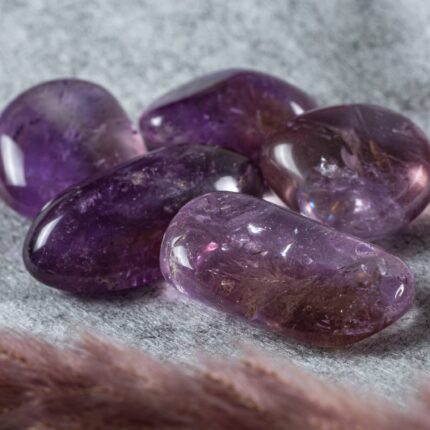
Abundance

Invite prosperity and success into every area of your life through the power of crystals. Our selection of stones for abundance, such as citrine and pyrite, balance the solar plexus chakra and remove psychological blocks relating to self-confidence and success. By cultivating a mindset of gratitude and abundance, these minerals help you to bring your plans to fruition and attract thriving opportunities.

Select options This product has multiple variants. The options may be chosen on the product page
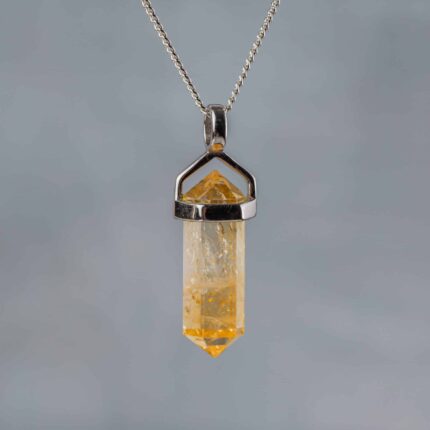
citrine pointe 28mm
citrine pointe2 2 scaled 1.jpg
Select options This product has multiple variants. The options may be chosen on the product page

28mm Citrine Point

Price range: CHF 79 through CHF 108
citrine pendentif
citrine pendentif artisanat dore2 1 scaled 1.jpg
Select options This product has multiple variants. The options may be chosen on the product page

Citrine Pendant

Price range: CHF 15 through CHF 34
citrine coeur pendentif
Sold out
coeur citrine2 scaled 1.jpg
Select options This product has multiple variants. The options may be chosen on the product page

Citrine Heart Pendant

Price range: CHF 39 through CHF 68
citrine coeur pendentif
Sold out
coeur cirtine4 scaled 1.jpg
Select options This product has multiple variants. The options may be chosen on the product page

Citrine Heart Pendant

Price range: CHF 49 through CHF 78
porte clés citrine
citrine argente porte cle2 1 scaled 1.jpg
Select options This product has multiple variants. The options may be chosen on the product page

Discover our other gemstones

agate

amazonite

amber

amethyst

ametrine

Origin

Citrine is a variety of quartz that forms mainly in quartz deposits, often in association with other minerals such as amethyst. The etymology of the word ‘citrine’ derives from the Latin word ‘citrus’, meaning lemon, and refers to its yellow to orange colour. Its main deposits are found in Brazil, Uruguay, Russia, Bolivia, Madagascar and the United States. It is also found in Austria and Germany.


Citrine: the history of the merchant’s stone

Citrine is also known as the “merchant’s stone”. It has always been regarded as promoting prosperity and business success. In the past, it was often confused with imperial topaz, which looks very similar.

Although it was not found in large quantities in their artefacts, the ancient Egyptians used golden-yellow gemstones to symbolise wealth and divine power. The Romans and Greeks used this gemstone in jewellery-making. They believed it possessed protective powers against ill intent and thought it fostered opulence.

In the mid-18th century, citrine became extremely popular when mineralogists realised that heat-treated amethyst and smoky quartz could reproduce its golden hues. This process is still widely practised today.

The Smithsonian Institute in Washington displays a faceted specimen weighing 2,255 carats from Brazil.


The benefits of citrine in crystal healing

Citrine, with its luminous hues, is renowned for its energetic and therapeutic properties. It is known as the stone of joy.


Emotional balance:

  • Joy and positivity: This gem radiates positive energy, dispelling negative feelings such as anger, fear and depression. It encourages people to overcome doubts and adopt an optimistic attitude. In this way, it boosts self-esteem and self-confidence.

  • Promoting Mental Clarity: It soothes mental confusion by addressing fears and anxieties. Thanks to this effect, it facilitates clear decision-making and helps one approach situations with a clear-headed perspective.


Physical well-being:

  • Boosting the immune system: It has a stimulating effect on the immune system, thereby helping to prevent illness and speed up recovery.

  • Supporting digestion: Citrine is known for its beneficial effects on the digestive system, aiding detoxification and improving digestion.

  • Improving Endurance: It is often used to revitalise the body, boosting physical energy and improving resistance to fatigue.


Spiritual Harmony:

  • Raising vibrations: Citrine helps to raise energy vibrations, facilitating connection with higher spiritual planes. It also helps to centre the mind and achieve a state of inner peace, allowing for deeper introspection during meditation.

  • Fostering the manifestation of desires: It supports the process of manifesting thoughts and helps to attract prosperity and bring intentions and desires to fruition.


Effect on the Chakras:


Solar Plexus Chakra (Manipura) Citrine is particularly effective at activating and balancing the solar plexus chakra, located at the level of the stomach. It stimulates self-confidence, personal power and mental clarity. Through its work on this chakra, it helps to overcome fears and make informed decisions.
Sacral Chakra (Svadhisthana) Citrine encourages creativity, passion and vital energy by working on the second chakra. It helps to release emotional blockages, promoting a healthy expression of emotions and desires. This leads to a more fulfilling and balanced life, both emotionally and physically.


How can citrine be combined with other semi-precious minerals?

Citrine combines harmoniously with various semi-precious minerals to enhance and balance its effects. Here are a few examples of effective and beneficial combinations.

  • Citrine & Clear Quartz: Clear quartz is known for amplifying energies. This combination stimulates mental clarity and positive energy, promoting a more powerful manifestation of intentions and desires, whilst purifying and balancing the energy bodies.

  • Citrine & Carnelian: Carnelian, with its invigorating and motivating energy, perfectly complements citrine’s action. Together, they encourage creativity and action, helping to overcome procrastination and achieve goals. This combination is ideal for those seeking to energise their lives and bring their projects to fruition.

  • Citrine & Aventurine: Green aventurine, a stone of luck and prosperity, combines with citrine to attract abundance and success. Their synergy fosters a positive attitude and an optimistic mindset, whilst balancing the energies of the heart and solar plexus.

  • Citrine & Labradorite: Labradorite, known for its ability to protect and transform, complements citrine’s effect by offering protection and stimulating creativity (particularly specimens with golden sheen). This combination helps to dispel negativity and boost self-confidence, enabling you to better fulfil your personal and professional aspirations.

  • Citrine & Sunstone: Sunstone, which encourages joy and enthusiasm, pairs perfectly with citrine to amplify positive energy. Together, they bring a sense of happiness and self-confidence, boosting motivation and creativity. This combination is ideal for those seeking to attract prosperity and success.


Care and Use of Citrine

Purification and Recharging:

Citrine must be cleansed to remove any negative energies it may have absorbed over time. This practice helps restore its full energetic capacity.

Purification: It can be purified by running it under tap water for a few minutes or by soaking it in a bowl of salt water overnight. It can also be placed for several hours on a cluster of quartz, an amethyst geode, a Flower of Life, or dry salt.

Recharging: To recharge it, simply expose it to sunlight for a few hours. Natural light is ideal as it restores the stone’s intrinsic solar energy. It can also be recharged in the light of the full moon.


Care:

Cleaning: To clean it physically, use lukewarm water with mild soap and a soft brush. Avoid harsh chemicals that could damage the stone.

Storage: Keep citrine away from direct sunlight for long periods to prevent it from discolouring. A pouch or box lined with soft fabric is ideal for protecting the stone from scratches.

Precautions: Avoid thermal shocks or sudden changes in temperature, which could weaken the gemstone. Handle it with care to prevent cracks or breakage, and keep it away from harsh chemicals.


Citrine jewellery: Citrine in jewellery

Its warm hues, ranging from pale yellow to reddish-brown, make it a popular gemstone in jewellery.

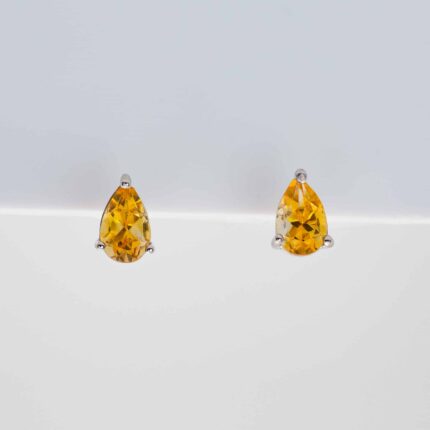
Cut and Shape: Jewellers make the most of its transparency and clarity to cut it into various shapes such as ovals, rounds, cushions and pears. Faceted cuts maximise its natural brilliance.

Yellow Gold: The warmth of yellow gold complements its golden hues, creating visual harmony and enhancing the stone’s brilliance.

Silver: Silver showcases the stone and creates affordable, elegant jewellery.


Other Uses for Citrine

Meditation: Use it during your meditation sessions to stimulate mental clarity, concentration and positive energy. It helps to centre the mind and makes it easier to visualise your goals.

Decoration: As a decorative item, citrine adds a luminous and energising touch to any space.

Feng Shui and Well-being: In Feng Shui, it is placed in the study to attract wealth and abundance. It can also be used in workspaces to stimulate creativity and productivity.


Mineralogy and Composition of Citrine

It is a variety of quartz characterised by its yellow to golden colour, resulting from traces of iron in its crystalline composition. Belonging to the group of macrocrystalline quartz, it shares its mineralogical properties with amethyst and smoky quartz.


Group / family Quartz
Subgroup Macro-crystalline
Chemical class Silicon dioxide (SiO₂)
Subclass Tectosilicate
Chemical formula SiO₂


Formation:

Quartz (SiO₂) is a common mineral that forms as a result of the cooling of silica-rich hydrothermal solutions. These solutions can penetrate fissures and cavities in rocks, where they cause quartz to precipitate as crystals. Citrine forms when environmental conditions change during the quartz crystallisation process.


Main component Silicon dioxide: Like all varieties of quartz, citrine is composed mainly of silicon dioxide.
Other components Aluminium (Al)
Hydrogen (H)
Lithium (Li)
Inclusions Iron (Fe): Responsible for its golden-yellow colour.


Physical properties of citrine

Hardness and durability Mohs scale: It has a hardness of 7 on the Mohs scale, making it durable and scratch-resistant.
Refraction of light Refractive index: Approximately 1.54 to 1.55
Birefringence: Low, approximately 0.009; it is therefore not visible to the naked eye.
Density Specific gravity: Its density varies around 2.65 g/cm³.

Transparency and appearance:

Transparency: The finest qualities are often completely transparent, with no inclusions visible to the naked eye. They may also be more opaque if inclusions or impurities are present.

Colour: It displays a range of colours from pale yellow to intense golden yellow, including orange hues. Bright, uniform colours are the most prized. Natural specimens are rare. They are recognised by their pale yellow colour. Others are produced by heating amethyst or smoky quartz and display darker, orange-tinged hues.


Buying Citrine jewellery at Sudamerica Stones

Expertise and Craftsmanship

Sudamerica Stones offers a wide range of citrine jewellery, including necklaces, bracelets and earrings. Each piece is designed to showcase the natural beauty of citrine. The emphasis is on high-quality craftsmanship, with particular attention to detail and finish. Our stones are selected for their quality. Our range is crafted from 925 sterling silver, brass or silk thread. Our team places great importance on your satisfaction! Our customer service team is on hand to help you choose the perfect piece of jewellery or answer any questions you may have.


FAQs about Citrine

👉 What are the main benefits of wearing citrine jewellery?

In crystal healing, citrine is renowned for its positive energetic properties, bringing joy, vitality and optimism to the wearer. It is often associated with attracting prosperity and success, helping to manifest intentions and achieve financial goals. As well as its energetic properties, it is an aesthetically pleasing stone – often referred to as a semi-precious stone – with warm yellow to golden hues that add a touch of radiance to any style of jewellery. It is also durable due to its hardness (7 on the Mohs scale), which makes it resistant to everyday wear and tear. In short, it is ideal for regular wear.

👉 How can you tell the difference between natural citrine and treated citrine?

To distinguish natural citrine from treated citrine, several criteria can be taken into account. Natural specimens tend to have a uniform pale yellow to golden colour, whilst treated crystals, often derived from heated amethyst, may display more orange or dark brown hues. Another indicator to look out for is the presence of inclusions, which may be visible to the naked eye or under a loupe. Synthetic stones or glass generally do not contain any. To be certain of the stone’s nature, it is recommended that you consult a gemmologist or speak to a trusted gemstone dealer.

👉 Can citrine really attract prosperity and financial success?

In crystal healing, citrine is often referred to as ‘the stone of success’ or ‘the merchants’ stone’, as it is believed to attract prosperity and success. It is believed that wearing this gem or placing it in one’s workspace can stimulate positive energy, creativity and concentration, thereby contributing to better decision-making and positive financial outcomes. Although these effects have not been scientifically proven, many people find that citrine helps them to remain motivated and optimistic, which can indirectly promote their success. Indeed, giving tangible form to an intention is an important step in establishing a new dynamic in life.

👉 What specific care does citrine jewellery require?

Citrine jewellery requires some specific care to maintain its lustre and durability. It is recommended that you clean it regularly with lukewarm water and mild soap, using a soft-bristled brush to remove dirt. Avoid prolonged exposure to heat and direct sunlight, as this can alter the colour of the stone. Store your citrine jewellery separately in a soft cloth or a lined jewellery box to prevent scratches. Also avoid contact with chemicals, such as perfumes and cleaning products, which can damage the stone.

👉 How does citrine influence the chakras or the body’s energy?

In crystal healing, citrine is primarily associated with the solar plexus chakra (Manipura) and the sacral chakra (Svadhisthana). For the solar plexus, it is said to boost self-confidence, personal power and mental clarity, helping to overcome fears and make informed decisions. For the sacral chakra, citrine stimulates creativity, joy and sexual energy, helping to balance emotions and increase vital energy. In general, citrine is regarded as an energetic stone that radiates positive, revitalising and purifying solar energy, thereby having a positive influence on the body’s entire energy system.

👉 Can citrine be used to improve concentration and creativity?

Yes, citrine is often used in crystal healing to improve concentration and stimulate creativity. Its ability to emit positive, revitalising energy can help to clear the mind, eliminate negative thoughts and increase focus. This can be particularly beneficial during intellectual or creative work. Wearing citrine or placing it on your desk can help maintain sustained concentration and unleash your creative flow. By balancing the solar plexus chakra and the sacral chakra, citrine helps to align intuition and logic, thereby promoting better decision-making and innovation.

Read more