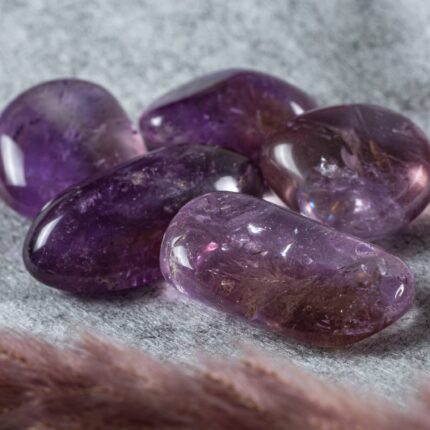
Labradorite:
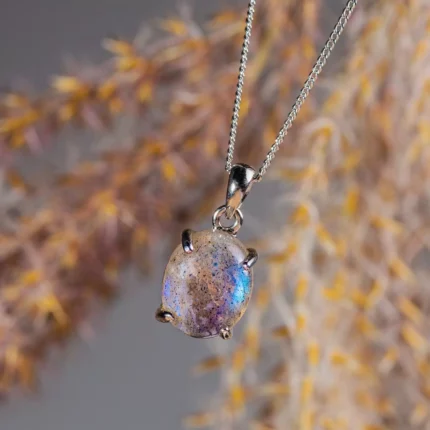
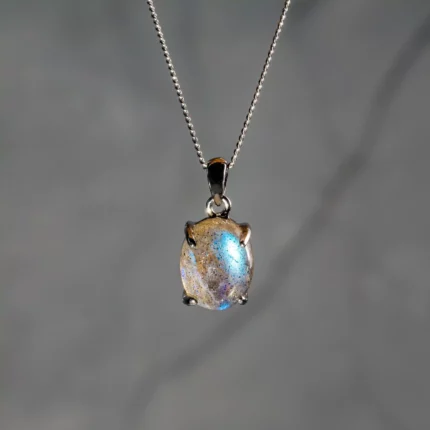
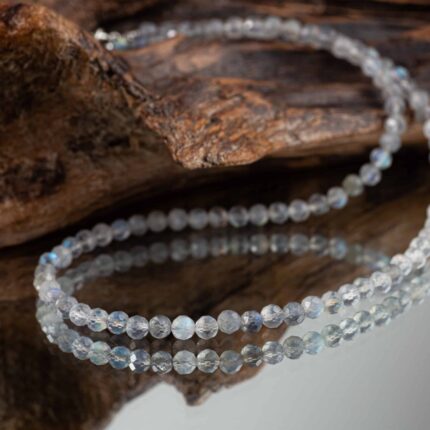
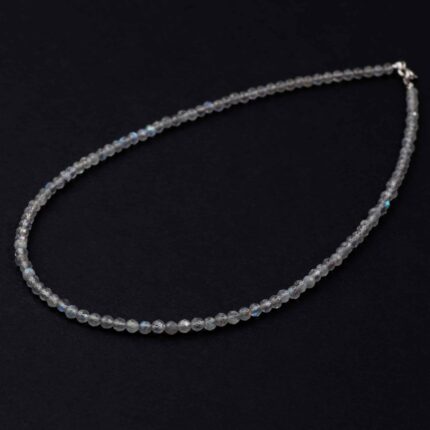
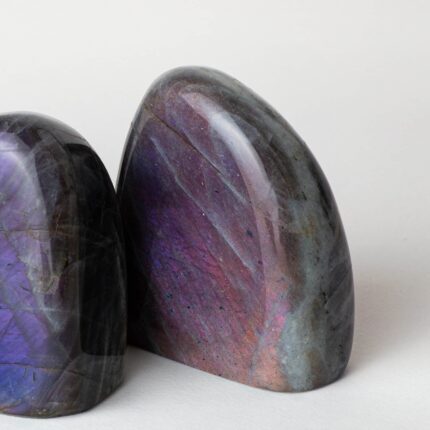
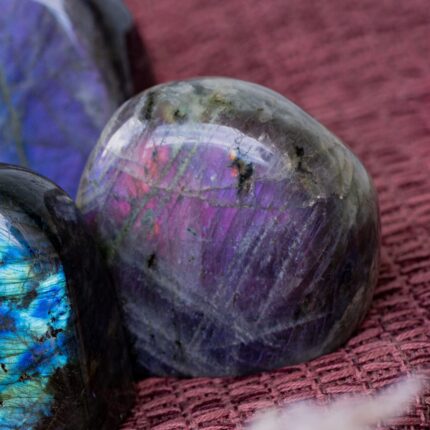
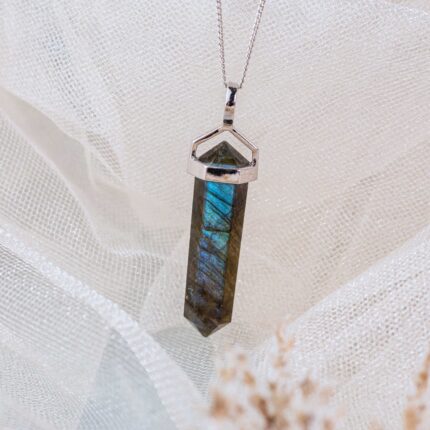
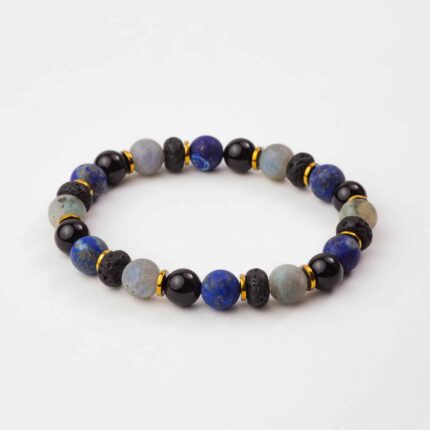
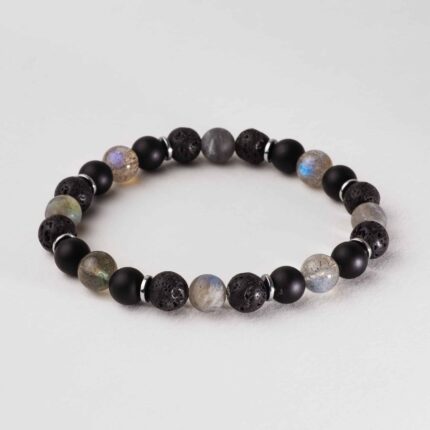
Discover our collection of labradorites. This fascinating semi-precious stone is known for its iridescent play of colours and its shimmering reflections that change with the light. A symbol of transformation, protection and intuition, labradorite is prized for its energetic properties. It is also said to be beneficial for creativity and imagination. With its shades of blue, green, gold and sometimes even purple, every labradorite is unique! Our range includes jewellery, tumbled stones, cut stones and rough stones that are sure to appeal to enthusiasts of natural minerals and crystal healing.
Filter by price
Virtues:
- Clairvoyance 20
- Intuition 20
- Letting go 20
- Protection 20
- Spirituality 20
Materials:
- Natural Stones 11
- Silver 3
Showing all 20 results
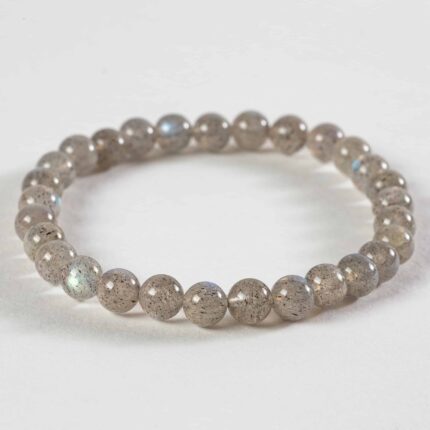
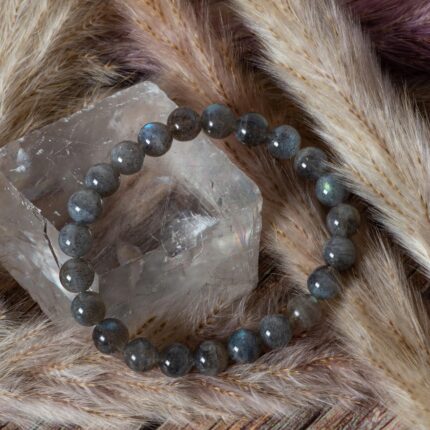
6mm Labradorite Bracelet
CHF 40 – CHF 45Price range: CHF 40 through CHF 458mm Labradorite Bracelet
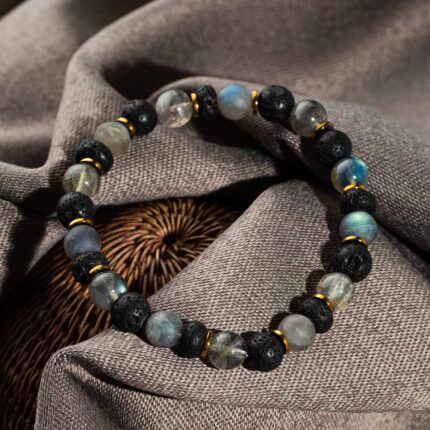
CHF 60 – CHF 65Price range: CHF 60 through CHF 65
Discover our other gemstones
Origin
Labradorite, which takes its name from the Labrador region of Canada, is a stone characterised by the phenomenon of adularescence, which creates vivid, colourful reflections. It belongs to the feldspar group. It is highly prized in jewellery and crystal healing for its unique appearance and protective properties.
Its main deposits are found in Canada, Madagascar, Finland and Russia. It is also found in Australia. This gemstone forms in igneous rocks such as basalts and gabbros, as well as in certain metamorphic rocks.
Labradorite: the stone of the Northern Lights
It was known to the Indigenous peoples of the Labrador region. They kept it uncut or in the form of pebbles. According to the animist beliefs of these communities, it may have been regarded as possessing a spirit, a life force and a spiritual existence of its own (the concept of the Inua). Due to its cleavage, it was not used as a tool, unlike chert. It was rediscovered in the 18th century by Moravian missionaries in the Labrador region of Canada. The famous mineralogist Abraham Werner named it in 1780 after this place of origin. During the Victorian era, it was celebrated in jewellery.
Spectrolite is an exceptional variety mined exclusively in Finland. It is distinguished by its particularly vivid play of colours. The Finnish geologist Aarne Laitakari and his son Pekka discovered a deposit in 1940 at Ylämaa in south-eastern Finland, whilst the Salpa Line fortifications were being built.
Mining began after the Second World War, becoming a major local industry. In 1973, the first workshop in Ylämaa began cutting and polishing spectrolite for jewellery. Subsequently, a gemmology centre offering training in gemstone cutting was established, along with an annual Gems and Minerals Fair, initiated by Esko Hämäläinen, then mayor of the town.
Over time, this stone has travelled across continents, finding its place in Western cultures where it symbolises intuition, clairvoyance and spiritual awakening.
The properties of labradorite in crystal healing
Labradorite is an essential stone in crystal healing, valued for its role as an energy shield and its regenerative properties. It is renowned for absorbing negative energies, stimulating intuition and protecting against unwanted influences.
Emotional Balance:
-
Protection: Labradorite is a valuable ally for those going through periods of stress or emotional exhaustion. It acts as a barrier against negative emotions, promoting a sense of calm and stability.
-
The healer’s stone: It is particularly useful for those working in emotionally demanding environments, especially in the care sector, as it helps to maintain balance and prevent burnout by absorbing disruptive energies from the surroundings.
Physical Well-being:
-
Stress relief: Labradorite is known to support the immune system by regulating the body’s energy. It is often used to relieve stress-related ailments, such as neck tension or migraines, thanks to its soothing effect on the body and mind.
Spiritual Harmony:
-
Clairvoyance: This stone is reputed to stimulate intuition and develop psychic abilities, such as clairvoyance. It is ideal for deep meditation, helping to explore higher spiritual planes.
-
Awakening: It also promotes introspection and self-discovery, enabling everyone to better understand their life path and awaken their spiritual potential.
Effect on the Chakras:
| Third Eye Chakra (Ajna) | It has a powerful effect on this chakra, stimulating perception and intuition. It helps to develop clear vision and to pick up on the subtle messages of the Universe. |
| Throat Chakra (Vishuddha) | It promotes self-expression and communication by releasing energy blockages, thereby enabling fluid and authentic speech. |
| Solar Plexus Chakra (Manipura) | It boosts self-confidence and protects against external influences, providing a boost of vital energy to help you achieve your goals. |
How can labradorite be combined with other semi-precious stones?
You can amplify and deepen the work you wish to undertake in crystal healing by combining stones with one another. Here are a few examples of combinations for labradorite:
-
Labradorite and Moonstone: A powerful combination for balancing feminine and intuitive energies, ideal for exploring one’s inner world and enhancing creativity. Moonstone promotes gentleness, receptivity and a connection to natural cycles.
-
Labradorite and Sodalite: Together, they promote clear and authentic communication. Sodalite stimulates logic, mental organisation and clarity of thought, thereby facilitating sincere and structured self-expression. It also promotes clairvoyance.
-
Labradorite and Hematite: This combination balances the mind and body. Hematite helps to revitalise physical strength, regulate energy flow and reduce mental fatigue. This synergy is ideal during times of stress or overwork, when balance between the mental and physical realms is crucial.
-
Labradorite and Rock Crystal: Quartz, known as the ‘Master Healer’, acts as an energy amplifier. It intensifies the protective and intuitive properties of labradorite. It facilitates spiritual connection and raises one’s energy vibration whilst helping one to remain centred and protected.
-
Labradorite and Citrine: Citrine is a solar stone that radiates positivity and vibrant energy. It promotes self-confidence, attracts abundance and helps transform negative thoughts into constructive opportunities. Together, they create a perfect synergy: one protects and clarifies, whilst the other energises and inspires.
Care and Use of Labradorite
Purification and Recharging:
Labradorite is a stone that works by absorbing negative energies from its surroundings. To maintain its protective and regenerative properties, it is essential to care for it regularly.
Purification: Run it under a gentle stream of cold water for a few moments, then leave it to air-dry. You can also purify it by placing it on a cluster of quartz or amethyst overnight. Another method is to place it on a bed of salt.
Recharging: It can be recharged in the soft moonlight, particularly on nights when there is a full moon. Simply place it outside or near a window overnight to allow it to regain its energy. You can also revitalise it by placing it on a Flower of Life. Avoid prolonged exposure to sunlight, as its iridescent sheen may fade over time.
Care:
Cleaning: To look after your jewellery, clean it regularly with lukewarm water and mild soap to remove any residue and impurities. After cleaning, rinse thoroughly with clean water and dry gently with a soft cloth. Avoid using harsh chemicals or abrasive cleaners.
Storage: Store your jewellery separately from other items to prevent scratches. Use fabric-lined pouches or padded jewellery boxes. Avoid storing it in places that are too hot or damp.
Precautions: Avoid wearing your jewellery during activities that could expose it to knocks or chemicals. Also take care not to expose the stone to intense, prolonged light to preserve its lustre.
Uses of Labradorite:
Meditation: It is ideal for use during your meditation sessions. Its protective energy helps to calm the mind, strengthen intuition and connect with your inner self. Hold it in your hands or place it on your third eye chakra to deepen your practice, aid visualisation and protect yourself from intrusive energies whilst meditating.
Jewellery: Enjoy the benefits of this gemstone by wearing it as jewellery. Its delicate iridescence adds an aesthetic appeal much prized by jewellers.
Decoration: As a decorative item, it adds a touch of elegance to your home thanks to its unique iridescent sheen. Placed on a bedside table, it can promote restful sleep. It is also valued by carers and highly sensitive individuals, who may place it in their workplace as it protects empaths.
Feng Shui and Wellbeing: In Feng Shui, labradorite can be placed in areas associated with protection, such as the entrance to the home. In an office or workspace, it promotes mental clarity and protects against emotional stress.
Mineralogy and Composition of Labradorite
Labradorite belongs to the feldspar group, a family of minerals that is very widespread in the Earth’s crust. It is characterised by an optical phenomenon known as adularescence, an iridescence that produces a play of colours. This play of colours is caused by light interference resulting from internal microscopic structures. This property makes it a highly prized stone in jewellery.
| Group / family | Plagioclase feldspars |
| Subgroup | Intermediate feldspars |
| Chemical class | Tectosilicates |
| Chemical formula | (Na,Ca)(Al,Si)₄O₈ |
Formation:
Labradorite forms in igneous rocks, particularly basalts and gabbros, as well as in certain metamorphic rocks. It crystallises at high temperatures as the magma cools slowly, allowing the minerals to form triclinic crystals. The phenomenon of adularescence, which characterises this stone, is due to the presence of microscopic structures causing light interference, resulting from the arrangement of the internal mineral layers. Labradorite deposits are found mainly in Canada, Finland and Madagascar.
| Main component | Plagioclase feldspar (silicate group): It is mainly composed of sodium and calcium aluminosilicate, forming a triclinic crystal structure. |
| Other components | Silica, alumina, calcium: Silica is the basic element of silicates, whilst alumina and calcium are essential to the crystalline structure. |
| Internal micro-cracks: these create the characteristic iridescence by scattering light depending on the viewing angle. | |
| Iron (Fe) and titanium (Ti): responsible for the stone’s blue, green or golden reflections. | |
| Inclusions | Mineral inclusions: Various impurities trapped during crystallisation, which make each piece unique. |
Physical Properties of Labradorite
| Hardness and resistance | Mohs scale: 6 to 6.5. It is hard enough to resist light scratches.
Impact resistance: Average. Due to its lamellar structure, this gemstone is prone to fracturing if subjected to impact. |
| Refraction of Light | Refractive index: 1.55 to 1.57. It has a low refractive index, which gives its reflections a subtly luminous and soft appearance. |
| Birefringence: None. Unlike some stones, labradorite does not exhibit double vision due to its specific optical structure. | |
| Density | Specific gravity: Approximately 2.69 to 2.72. This average density reflects its feldspar-rich composition and gives the stone a lightness that makes it suitable for jewellery. |
Transparency and appearance:
Transparency: Labradorite is generally opaque, though it is more rarely found in a translucent form.
Colour and patterns: It is prized for its aduralcence, an iridescence that reveals shades of blue, green, gold and sometimes purple or red.
Labradorite FAQ
👉 Why is labradorite called the “protective stone”?
Labradorite is known as the “protective stone” because of its powerful energetic properties, which act as a shield against negative energies. In crystal healing, it is renowned for absorbing harmful environmental energies, whether these stem from toxic people, stressful situations or electromagnetic pollution. This stone also acts as a filter, preventing unwanted energies from affecting the wearer’s aura, whilst strengthening their psychic defences. Furthermore, labradorite is often associated with the regeneration of inner energy. It helps to restore emotional balance and bring one back to centre, making it a valuable tool for highly sensitive people or those working in high-pressure environments. With its iridescent sheen, it also symbolises inner light, protecting the wearer whilst bringing them inspiration and confidence.
👉 How do you cleanse and recharge labradorite?
The most common method of purification is to gently rinse the stone under a trickle of cold water. Another option is to place it on a bed of salt for a few hours. You can also place it on a cluster of quartz or amethyst, which absorb and transmute unwanted energies. To recharge labradorite, expose it to moonlight, ideally during a full moon. You can also place it on a Flower of Life or a cluster of crystals to amplify its energy. Avoid prolonged exposure to sunlight, as its iridescent sheen may be damaged.
👉 What are the effects of labradorite?
Labradorite is renowned for its many beneficial effects on an energetic, emotional and spiritual level, making it an essential stone in crystal healing. Energetic protection: Labradorite acts as a shield, absorbing and neutralising negative energies. It protects the wearer from unwanted external influences, particularly toxic people or oppressive environments. Emotional balance: On an emotional level, this stone helps to calm the mind and overcome stress or anxiety. It is ideal for regaining a sense of serenity and finding one’s centre, particularly for highly sensitive people. Spiritual development: Labradorite stimulates intuition and imagination. It promotes a connection with the subconscious, thereby helping to explore spiritual dimensions and develop abilities such as clairvoyance. Its iridescent sheen reflects its ability to reveal inner light and inspire creativity and self-confidence.
👉 Is labradorite suitable for all star signs?
Labradorite is a universal stone that can suit all astrological signs thanks to its protective and balancing properties. However, it is particularly beneficial for certain signs, depending on their energetic characteristics and needs. Gemini, who are often prone to mental distraction, can use it to regain balance and concentration. Pisces, who are naturally intuitive but can sometimes be hypersensitive, will benefit from its protection against negative external influences. Sagittarians, in their quest for exploration and personal development, will appreciate its power to stimulate intuition and imagination. It remains, however, a versatile stone, accessible to all. It acts as an energetic shield, promotes mental clarity and stimulates creativity.
👉 Is labradorite a precious or semi-precious stone?
Labradorite is classified as a semi-precious stone. It belongs to the feldspar group and is particularly well known for its unique optical phenomenon known as ‘adularescence’. This iridescent play of colours, ranging from blue to green via gold and sometimes even with violet hues, makes it a much-loved stone. Although it is not as rare as precious stones such as diamonds, rubies or sapphires, its beauty makes it an exceptional stone. Certain particularly spectacular varieties, such as spectrolite with its intense multicoloured sheen, are highly prized. In short, whilst it is not a precious stone in the strict gemmological sense, it holds an important place amongst semi-precious stone enthusiasts due to its unique appearance.
👉 What is the difference between labradorite and spectrolite?
Labradorite is a gemstone recognisable by its iridescent sheen, caused by the phenomenon of adularescence, which can vary between shades of blue, green, gold and sometimes orange. It is mined in various regions around the world, notably in Canada, Finland, Madagascar and Russia. Spectrolite is a rare and highly prized variety of labradorite, mined exclusively in Finland (Ylämaa). It is considered more valuable due to its exceptional adularescence, displaying more vivid and varied colours than other specimens. Some dealers in labradorite from other sources use this name for their pieces that display vivid colours. However, this name should only apply to specimens originating from Finland.