






Kunzite and Pearl Necklace – AVRIL

CHF 95
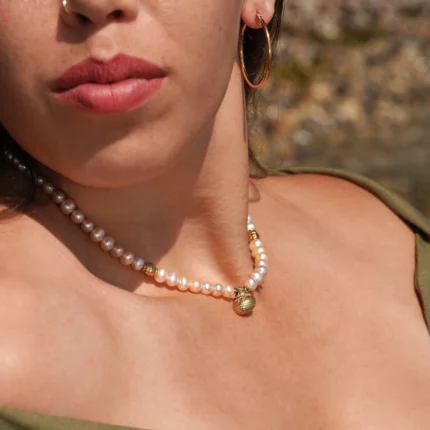
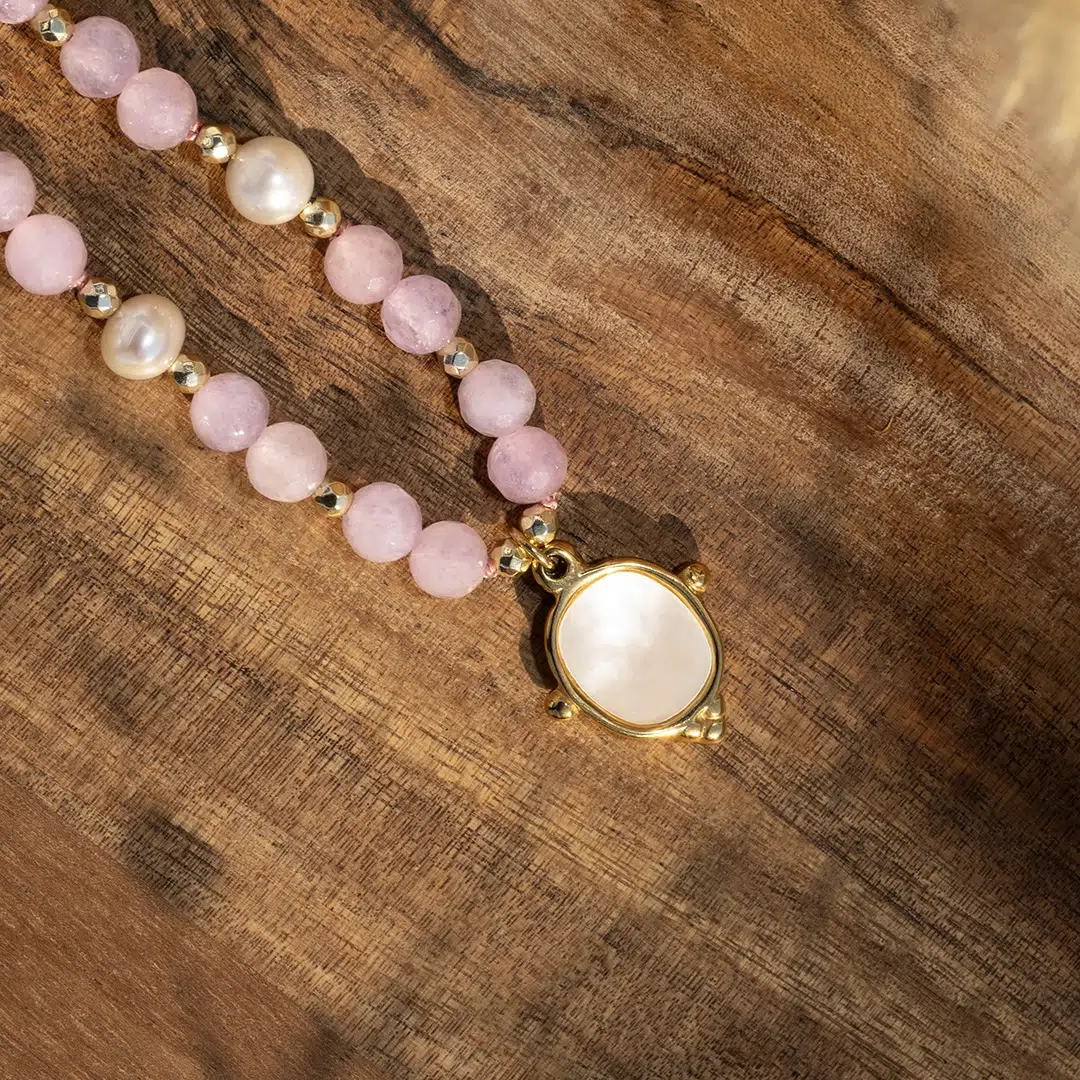
Kunzite & Pearl Necklace
Handcrafted piece made from natural stones
1 in stock
Standard delivery or recorded delivery.
Click & Collect
Available within 1 to 2 working days.
- Cornavin Shop
- Balexert Shop
Delivery within Europe
CHF 10.- for delivery within Europe, excluding Switzerland.
For further information, please see our terms and conditions for delivery terms.
Back
Return period: 14 days.
Product information
| Length | 40 cm |
|---|---|
| Bead diameter | 8mm |
| Thread | Silk |
| Charm | 20 x 15 mm, Gold-plated steel, mother-of-pearl |
Description
Kunzite & Pearl Necklace – AVRIL
Symbolism of kunzite: Love – Gentleness – Positivity
Symbolism of pearls: Purity – Spirituality – Gentleness
Our Limited Edition necklaces:
Discover our Limited Edition creations, crafted from a blend of semi-precious stones. The delicate details of our necklaces highlight the natural beauty of the minerals. Each of these necklaces has been carefully crafted to bring harmony and refined elegance. Give free rein to your creativity and express your individuality through these one-of-a-kind pieces. Wear them individually for a subtle touch or layer them to create a personalised look.
Kunzite:
Kunzite takes its name from the first gemmologist to identify it: George Frederick Kunz. Its pink to violet colour is due to the presence of manganese. Its colour can vary depending on the amount of manganese present during formation. Kunzite is a variety of spodumene. It is composed of lithium, beryllium and aluminium silicate. Kunzite forms in spodumene deposits around the world. It grows in elongated prismatic crystals. Spodumene, whose name derives from Greek and means ‘ash-coloured’ due to its often grey colour. Spodumene exhibits the phenomenon of phosphorescence. It is capable of emitting light in the dark after being exposed to the ultraviolet rays of natural light.
The main deposits of kunzite are found in: Brazil, Afghanistan, Madagascar and the United States
Cultured pearls:
These are formed naturally or through human intervention inside molluscs such as oysters and mussels, which coat a foreign body with aragonite and conchiolin, the main components of mother-of-pearl. Mother-of-pearl consists of calcium carbonate in crystalline form, combined with organic proteins, which gives pearls their unique strength and lustre. The characteristic iridescent sheen of pearls, known as ‘orient’, results from the diffraction of light on the successive layers of mother-of-pearl deposited by the mollusc. The colours of cultured pearls vary depending on the species of mollusc, water conditions and the minerals present, ranging from pure white to pink, gold, grey and black.
The main production sites for cultured pearls are in Japan, China, Australia and French Polynesia.