
Handcrafted Crystal Necklace

CHF 69
Rock Crystal Necklace
Discover our range of handcrafted stone necklaces from Brazil, combining the natural elegance of the stones with local craftsmanship.
2 in stock
- Its hardness makes it fairly durable, but do take care to protect your rock crystal from knocks. We recommend that you remove your jewellery before taking part in any physical activity
- Quartz is not affected by water. However, it is best not to wear your stone at the beach or in the swimming pool
- Avoid contact with corrosive substances, such as detergents and other household products that could damage it
- Store your jewellery in a dry place, away from light and heat
- There are several ways to cleanse your stones; click here: caring for and cleansing semi-precious stones
Standard delivery or recorded delivery.
Click & Collect
Available within 1 to 2 working days.
- Cornavin Shop
- Balexert Shop
Delivery within Europe
CHF 10.- for delivery within Europe, excluding Switzerland.
For further information, please see our terms and conditions for delivery terms.
Back
Return period: 14 days.
Product information
| Length |
|---|
| Dimensions of the stone(s) |
| Materials |
| Symbol |
Description
Rock Crystal Necklace
Brazilian Handicrafts:
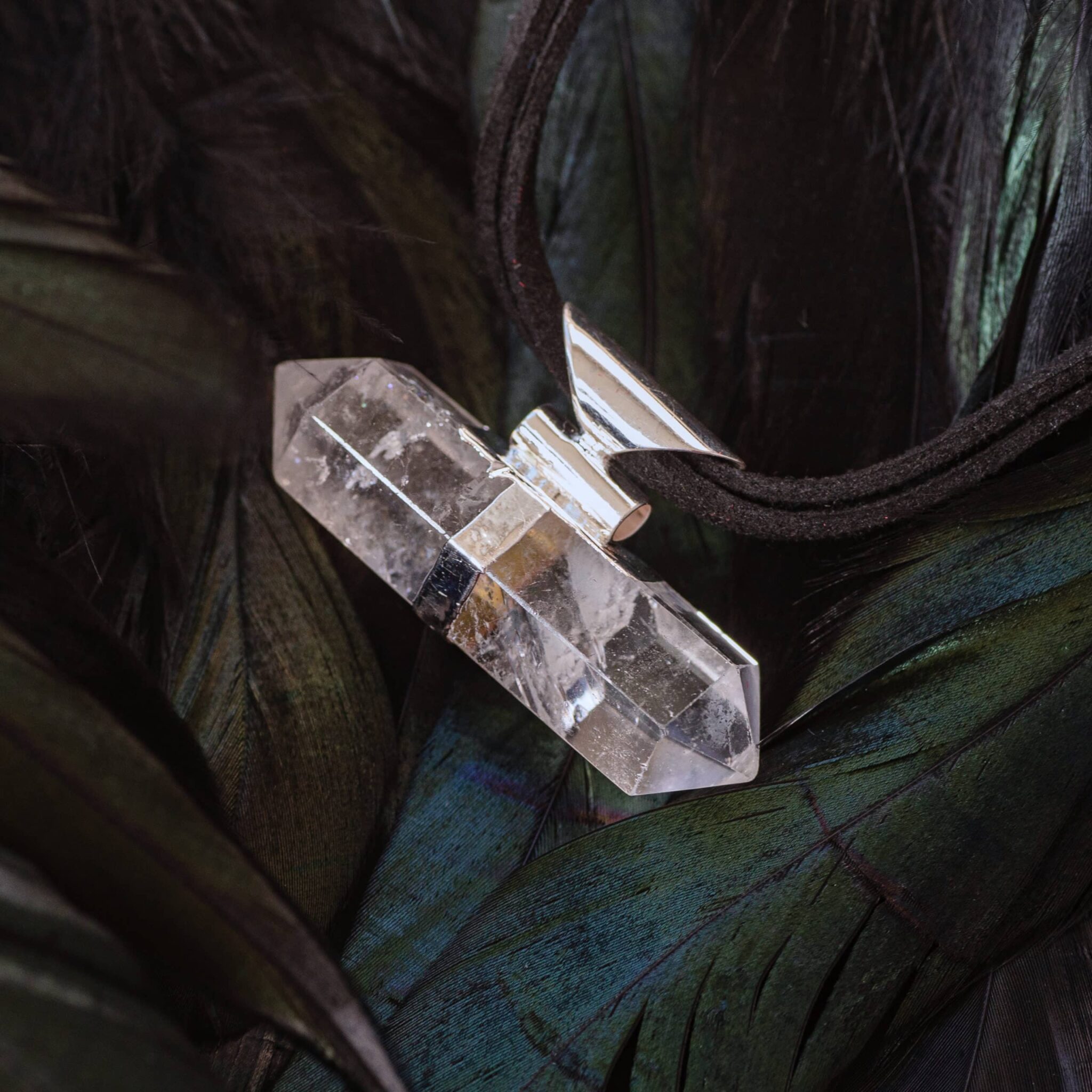
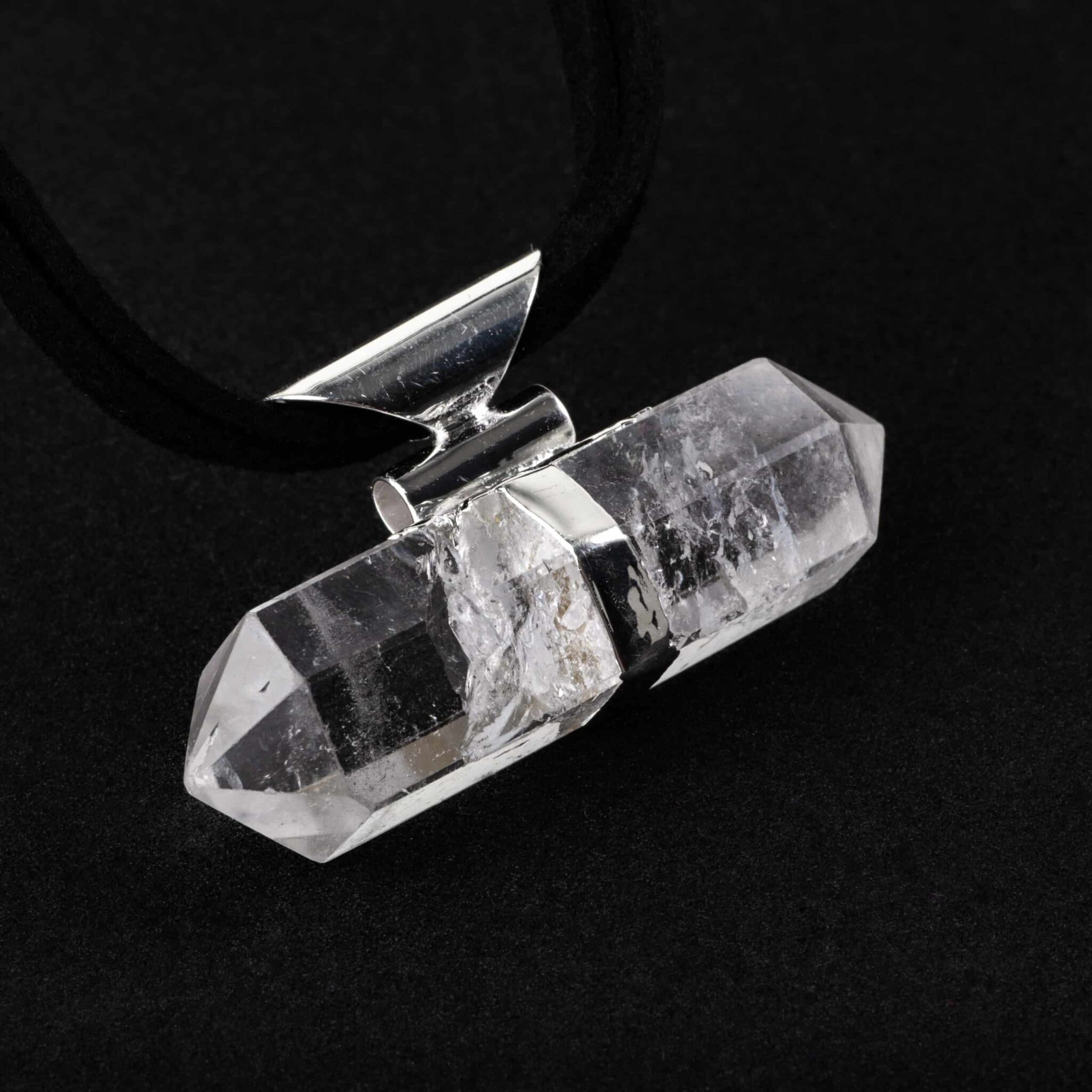
Discover our range of handcrafted stone necklaces from Brazil, combining the natural elegance of the stones with local craftsmanship. Each necklace is carefully crafted to highlight the beauty of the minerals. The necklace features a 50cm-long fabric cord. It has a steel clasp with a chain to adjust the length. The stone is cut into a double-terminated point shape. The fittings are made of steel.
Rock crystal:
It is one of the most abundant gemstones on Earth. The origin of the word ‘quartz’ is uncertain. The first hypothesis suggests that it may derive from the term ‘quaterz’ or ‘quaderz’, which, until the 16th century, referred to lower-quality ores. Another theory suggests it comes from a contraction of the German word ‘gewärz’, meaning ‘growth’ or ‘sprout’. The term ‘crystal’, meanwhile, derives from the Latin ‘crystallum’, meaning ‘ice’, due to its resemblance to frozen water. Quartz is characterised by its transparency. From a mineralogical point of view, quartz is composed of silicon dioxide. The quartz family is highly diverse, comprising varieties such as amethyst (purple), citrine (yellow), aventurine (green or orange), rose quartz and many others. Each has its own unique properties! One of the interesting properties of quartz is its piezoelectricity: it can generate an electric charge in response to mechanical pressure. This characteristic makes it useful in many scientific and technological applications, particularly quartz watches. Quartz is of great importance in geology, as it is often associated with significant rock formations, such as gold veins and mineral deposits.
The main quartz deposits are found in Brazil, although quartz is found all over the world.