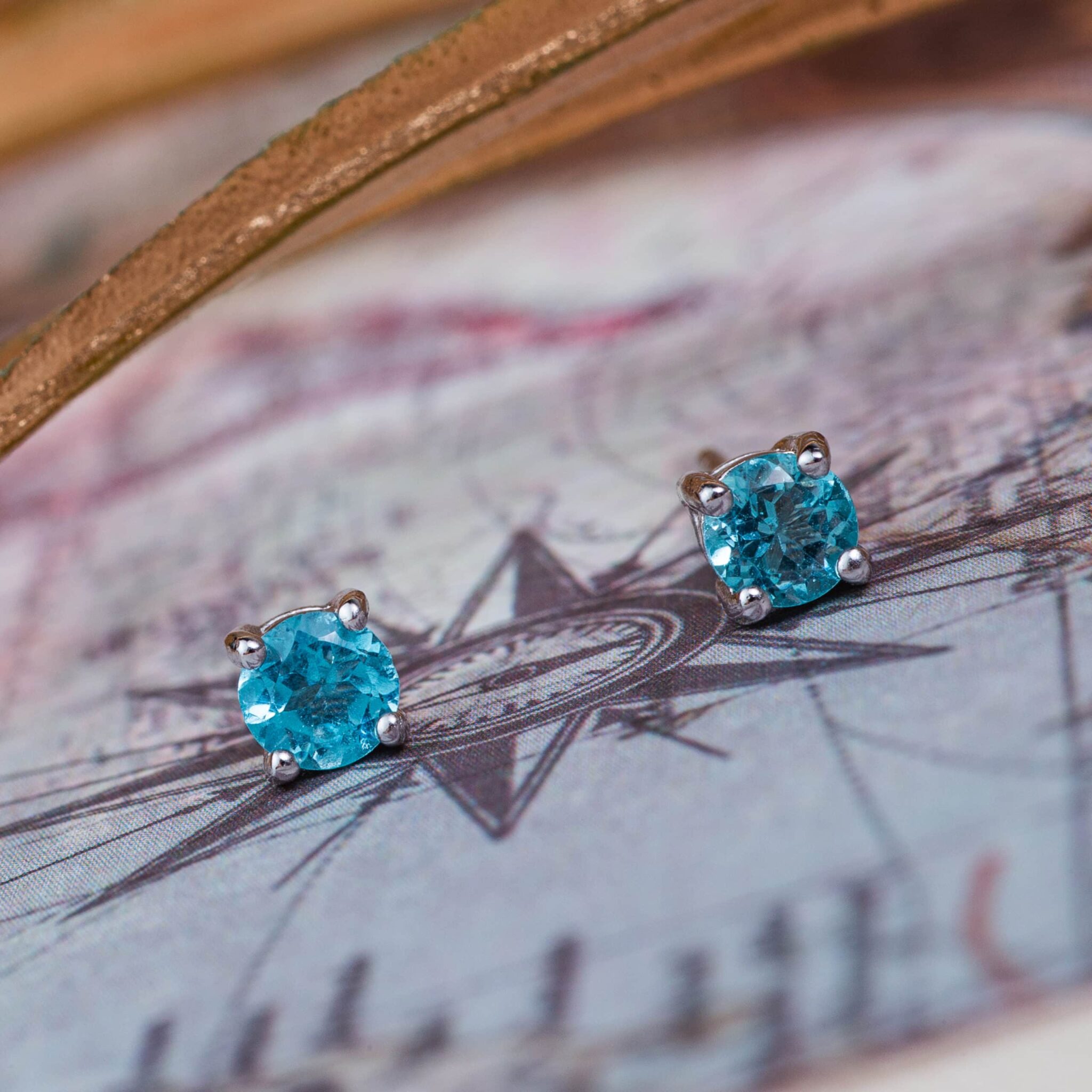


Apatite Earrings 4mm

CHF 110
Apatite Earrings
– Immerse yourself in the natural, timeless radiance of our collection of semi-precious stone and silver jewellery.
1 in stock
- Take care with apatite, as it is a relatively soft stone; store each piece individually in a thick pouch. We recommend that you remove your jewellery before taking part in any physical activity
- Apatite is not affected by water. However, it is best not to wear your stone at the beach or in the swimming pool
- Avoid contact with corrosive products, such as detergents and other household products, which could damage it
- Store your jewellery in a dry place, away from light and heat
- There are several ways to cleanse your stones; click here: caring for and cleansing semi-precious stones
The name ‘apatite’ comes from Ancient Greek. It is derived from the word ‘apataneo’, which means ‘to deceive’ or ‘to mislead’. Apatite was given this name because it is easily mistaken for other stones of the same colour. It forms in a variety of geological environments. Gems most often form in igneous rocks as they cool. Blue apatite is generally a fluorapatite, rich in fluorine. Its main deposits are found in Brazil, Madagascar, Myanmar, Sri Lanka, Pakistan and Afghanistan.
The blue colour is often due to impurities or the presence of rare-earth elements (such as neodymium or cerium) that become incorporated during its formation. In its raw state, blue apatite may have greenish tints or appear slightly dark. It is common for apatite to be heat-treated. Heat treatment helps to clarify the colour and make its blue hue more intense. Treated stones are, however, still considered natural.
In crystal healing, apatite is associated with the throat chakra and is said to promote communication, helping shy people to speak up in groups with greater confidence. It is also said to regulate emotional excesses and bring greater mental clarity, whilst instilling energy, optimism and vitality in people going through periods of anxiety.
Standard delivery or recorded delivery.
Click & Collect
Available within 1 to 2 working days.
- Cornavin Shop
- Balexert Shop
Delivery within Europe
CHF 10.- for delivery within Europe, excluding Switzerland.
For further information, please see our terms and conditions for delivery terms.
Back
Return period: 14 days.
Product information
| Dimensions | 4 x 4 mm |
|---|---|
| Materials | Natural Stones, Silver |
| Symbol | Communication, Creativity, Positivity |
Description
Apatite Earrings
Our Silver & Semi-Precious Stone Jewellery Collection:
Immerse yourself in the natural and timeless splendour of our collection of semi-precious stone and 925 sterling silver jewellery. Carefully set in elegant mountings, these pieces combine the classic refinement of silver with the unique hues of cut stones. Whether for a special occasion or everyday wear, our gemstone and silver jewellery adds a touch of sophistication and charm to your style whilst capturing the natural beauty of the gemstones. Let yourself be captivated by this natural and luminous collection, which will add a touch of elegance to your look.
Apatite:
The name ‘apatite’ comes from Ancient Greek. It derives from the word ‘apataneo’, meaning to deceive or fool. Apatite was given this name because of its resemblance to other precious minerals such as barite, peridotite and others. Blue apatite belongs to the apatite group, which consists mainly of calcium phosphates. The blue colour of this variety is due to the presence of metals such as iron. Blue apatite crystals form in a variety of geological environments, notably in phosphate deposits and sedimentary rocks. Apatites are frequently found in iron ore deposits, which poses a major challenge to the steel industry. This is because the phosphorus present in iron ores is entirely transferred to the metallic phase, making its removal during the steel refining process costly.
The main deposits of blue apatite are found in Brazil, Mexico, Myanmar, Sri Lanka and the United States.