Opal Stones & Jewellery

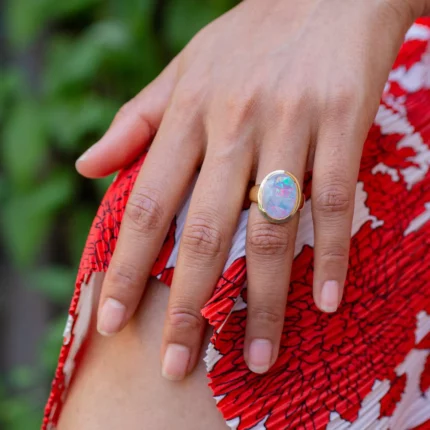
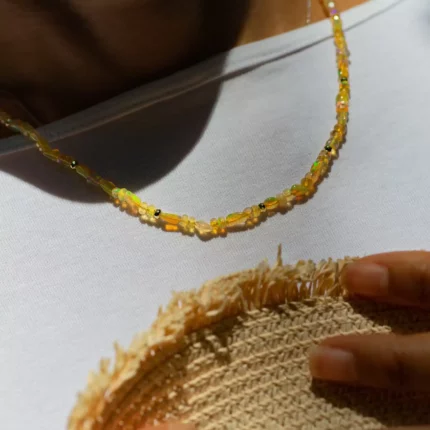
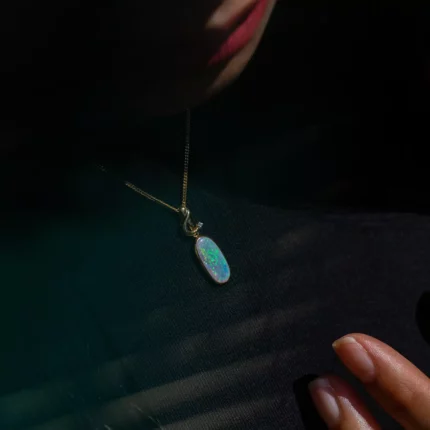
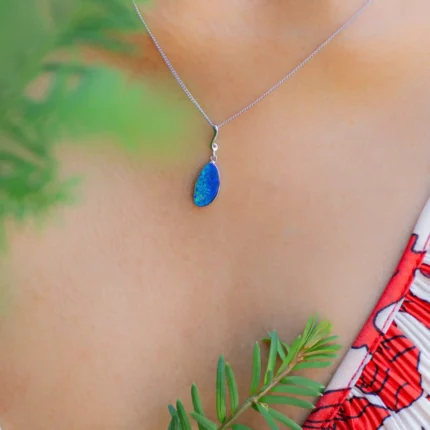
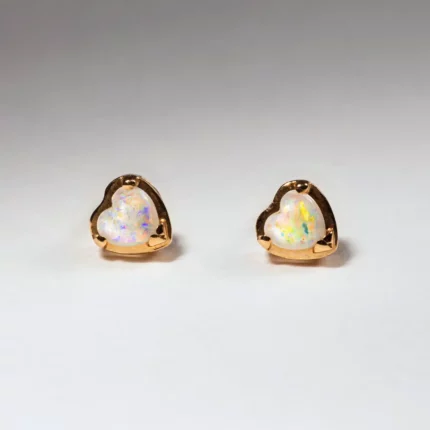
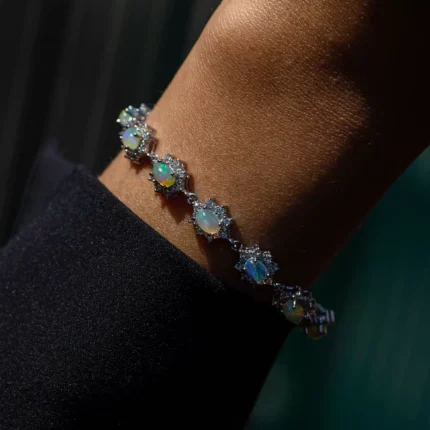
Loved for its beauty and rich symbolism, opal is famous for its play of colour: flashes of light that dance across the stone and shift with every movement. This effect is at its most vivid in precious opal, while common opal shows little or no play of colour but comes in beautiful soft shades. Our collection includes opal jewellery and rough stones.

Opal Pendant, 15mm
opale pendentif4 scaled 1.jpg
Select options This product has multiple variants. The options may be chosen on the product page

Opal Pendant, 15mm

Price range: CHF 290 through CHF 319
Opal Pendant, 13mm
opale pendentif
Select options This product has multiple variants. The options may be chosen on the product page

Opal Pendant, 13mm

Price range: CHF 220 through CHF 249
Green Opal Pendant, 18mm
opale verte pendentif
Select options This product has multiple variants. The options may be chosen on the product page

Green Opal Pendant, 18mm

Price range: CHF 89 through CHF 118
Green Opal Pendant, 16mm
pendentif en opale verte
Select options This product has multiple variants. The options may be chosen on the product page

Green Opal Pendant, 16mm

Price range: CHF 79 through CHF 108
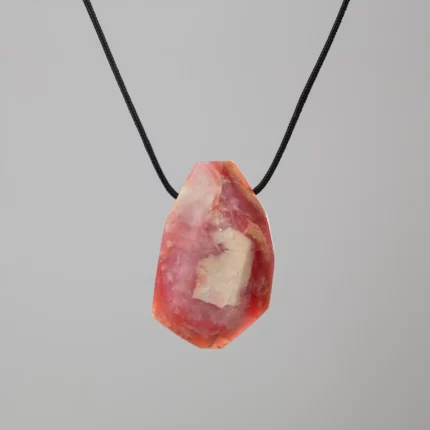
Pink Opal Cross Pendant
pendentif croix en opale rose
Select options This product has multiple variants. The options may be chosen on the product page

Pink Opal Cross Pendant

Price range: CHF 39 through CHF 68
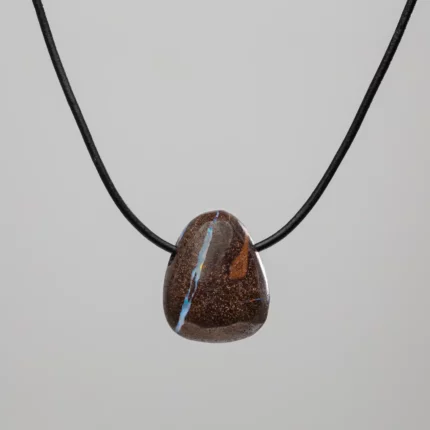
Boulder Opal Heart Pendant
Pendentif coeur en opale boulder
Select options This product has multiple variants. The options may be chosen on the product page

Boulder Opal Heart Pendant

Price range: CHF 39 through CHF 68
Pistachio Opal Bracelet, 6mm
bracelet opale pistache 6mm
Select options This product has multiple variants. The options may be chosen on the product page

Pistachio Opal Bracelet, 6mm

Price range: CHF 20 through CHF 25
Pistachio Opal Bracelet, 8mm
Select options This product has multiple variants. The options may be chosen on the product page

Pistachio Opal Bracelet, 8mm

Price range: CHF 25 through CHF 29
Pistachio Opal Bracelet, 10mm
bracelet opale pistache 10mm
Select options This product has multiple variants. The options may be chosen on the product page

Pistachio Opal Bracelet, 10mm

Price range: CHF 35 through CHF 39
Green Opal Bracelet, 8mm
bracelet opale verte 8mm
Select options This product has multiple variants. The options may be chosen on the product page

Green Opal Bracelet, 8mm

Price range: CHF 40 through CHF 45
Green Opal Bracelet, 10mm
bracelet opale verte 10mm
Select options This product has multiple variants. The options may be chosen on the product page

Green Opal Bracelet, 10mm

Price range: CHF 49 through CHF 55

Discover our other gemstones

Agate

amazonite

amber

amethyst

ametrine

angelite

carnelian

All our stones from A to Z

With its mesmerising play of colour, opal has captivated people since antiquity, from the Romans to the great jewellers of the 20th century. Below, discover where it comes from, what it symbolises, its crystal healing properties, how to care for it and how to recognise its many varieties.

Origin of Opal

The word ‘opal’ comes from the Sanskrit upala, meaning ‘precious stone’, which became opallios in Greek – ‘to see a change of colour’ – and later opalus in Latin. Opal is indeed famous for its iridescent play of colour, which shifts with the light. It usually forms in ancient sedimentary basins, such as dried-up lakes and inland seas. Australia is the world’s leading producer, and opal is also mined in Mexico, Brazil, Ethiopia and elsewhere.

History and Symbolism of Opal

Opal has a rich history, with many beliefs surrounding its mystical powers. The Romans saw it as a stone of protection and good fortune, and Pliny the Elder described it in his Natural History as one of the most precious and costly gems of his time.

In the 19th century, however, it gained a reputation for bringing bad luck, partly because of Sir Walter Scott’s novel Anne of Geierstein, in which a character who owns a magical opal suffers a string of misfortunes. Superstition did the rest, even though the belief is entirely unfounded.

Throughout history, opal has adorned the crowns and jewels of royalty in France, Hungary, the Holy Roman Empire and England. Napoleon is said to have given Empress Josephine an opal known as The Burning of Troy, famous for its intense red flashes. Renowned jewellers such as Cartier, Lalique and Tiffany soon embraced it in their designs.

The conditions in which opal forms have even allowed it to replace the bones and shells of ancient creatures. One example is a 72-carat black crystal opal that formed inside a belemnite fossil, found in 2003 and now on display in Adelaide. Another is Eric, a pliosaur skeleton discovered in 1987, entirely turned to opal.

Crystal Healing Properties of Opal

With its rich palette of colours and fascinating play of light, opal is valued in crystal healing for its many energetic and spiritual properties. Here is an overview of its main benefits.

Emotional Balance

  • Emotional Stability: Opal is known for steadying the emotions and bringing balance, helping to ease fear, anxiety and stress.

  • Expression and Release: It encourages you to express your emotions and better understand feelings you may have held back. It supports the release of negative emotions and past hurts, promoting emotional healing and self-acceptance.

Physical Wellbeing

  • Regeneration: Opal is renowned for its regenerative properties and is often used to support recovery after injury or illness.

  • Detoxification: It is said to help detoxify the blood and kidneys, supporting a healthier, more balanced body.

  • Immune Support: It is believed to strengthen the immune system, helping the body fight off infection and illness.

Spiritual Harmony

  • Awakening and Transformation: Opal is a stone of spiritual awakening, encouraging connection with higher dimensions and the development of intuitive and psychic abilities. It supports personal transformation and self-reflection, helping you understand and accept life’s lessons and grow spiritually.

  • Amplification and Protection: By amplifying energy, it helps to strengthen your intentions and manifest your desires, which is why it is often used in meditation and spiritual practice. It is also said to form a protective shield around the aura, keeping negative influences at bay.

  • Creativity and Inspiration: Opal stimulates creativity and imagination, helping artists and makers find new ideas and express themselves in their own way.

Opal and the Chakras

Sacral Chakra (Svadhisthana) Fire opal in particular is closely linked to the sacral chakra. It stimulates creativity, passion and sensuality, releasing emotional blockages and restoring vitality.
Heart Chakra (Anahata) Pink and green opals benefit the heart chakra, opening the heart to unconditional love, compassion and emotional healing.
Crown Chakra (Sahasrara) Clear and white opals are often associated with the crown chakra, encouraging spiritual connection, higher consciousness and enlightenment.

Which Stones Go Well with Opal?

Pairing opal with other stones can amplify its properties and create beautiful synergies. Here are five of our favourite combinations.

  • Opal & Citrine: Opal pairs beautifully with citrine, the stone of joy and abundance. Together, they amplify the power of manifestation to attract prosperity and spark creativity, boosting self-confidence and positive energy.

  • Opal & Garnet: With its revitalising, grounding energy, garnet combines with opal to enhance vitality and passion, boosting physical energy and determination.

  • Opal & Moonstone: Moonstone is a stone of femininity and intuition. Together, they bring emotional balance and inner harmony, developing intuition and balancing feminine and masculine energies.

  • Opal & Rose Quartz: This pairing creates a gentle, soothing energy that opens the heart to love and emotional healing. Rose quartz, the stone of unconditional love, nurtures compassion and self-acceptance.

  • Opal & Sodalite: Sodalite is known for bringing mental clarity and supporting communication. Together, they sharpen focus and ease self-expression – ideal for improving your communication and clarifying your thoughts.

Caring for and Using Opal

Cleansing and Recharging

Regular cleansing clears any negative energy your opal may have absorbed, whether while being worn or on display.

Cleansing: Most opals can be cleansed under running water for a few moments, but this should be avoided for Ethiopian opals, which must not come into contact with water. You can also place your opal for several hours on a quartz cluster, an amethyst geode or a bed of salt.

Recharging: Leave it in the moonlight or on a Flower of Life. As opal contains water and is sensitive to drying out, avoid prolonged exposure to sunlight.

Care

Opal is a delicate stone that needs a little extra care. Here are a few tips to keep your opal jewellery looking its best.

  • Sun and heat: As opal contains a significant amount of water, it is sensitive to drying out. Avoid wearing your opal jewellery in strong sunlight for long periods, and store it in a cool, shaded place, away from heat sources such as sunny windowsills or hot cars.
  • Chemicals: Opal reacts badly to harsh chemicals. Avoid spraying perfume or hairspray, or applying lotions, directly onto your jewellery, and take it off for cleaning, gardening and similar activities.
  • Gentle cleaning: Wipe your opal after each wear with a soft, lint-free cloth. Avoid brushes and abrasive materials, which can scratch its delicate surface.
  • Storage: Store your opal jewellery separately in a box lined with soft fabric, away from other jewellery that could rub against it or scratch it.
  • Knocks and scratches: As opal is relatively soft, protect it from knocks and scratches, and take it off for sport and other physical activities.

Ethiopian Opal: A Special Case

Welo opal from Ethiopia is hydrophane: it readily absorbs water. On contact with water, it can temporarily turn transparent and lose its play of colour. Don’t worry – it usually recovers its original appearance after a few days of drying. To be safe, take off your jewellery before washing your hands or swimming, and avoid chlorinated water and seawater in particular.

How to Use Opal

Meditation: Opal is known for strengthening spiritual connection and opening the higher chakras, supporting inner exploration. Hold it in your hand or place it on your third eye or heart chakra while meditating to calm the mind, soothe the emotions and reach a state of deep relaxation. You can also place several opals around your meditation space to amplify its energy.

Decoration: Rough opals and opal specimens make striking display pieces, their flashes of colour coming alive as the light changes throughout the day. Keep them out of direct sunlight to protect them from drying out.

Mineralogy and Composition of Opal

Opal is a hydrated form of silica. Unlike quartz, it has no regular crystal structure: it is amorphous, which is why it is classed as a mineraloid rather than a true mineral. It forms at low temperatures in silica-rich sedimentary or volcanic environments, and usually contains between 4 and 10% water, sometimes more than 20%. It can also replace other minerals or organic matter, such as shells, bones or wood.

Opal is divided into two main families: precious opal, which displays a play of colour that shifts with the viewing angle, and common opal, which does not. The play of colour in precious opal is caused by light diffracting through a regular arrangement of tiny silica spheres of almost identical size.

Type Mineraloid
Chemical class Hydrated silica
Chemical formula SiO₂·nH₂O

Formation

Opal forms within the first few hundred metres below the Earth’s surface, through the circulation of water. As silicate rocks weather, they release silica into the water, which then slowly settles and hardens into opal. It can form through ordinary weathering by rainwater or through the circulation of hot, hydrothermal water.

Main component Hydrated silica: Its composition is close to that of quartz, but its amorphous structure sets it apart.
Inclusions Opal can contain fossils preserved by replacement or inclusion, most often plant roots. In 2020, a fossilised cicada nymph between 5 and 10 million years old was discovered inside an opal.

Physical Properties of Opal

Hardness and Durability Mohs scale: 5.5 to 6.5, making opal relatively soft.

Impact resistance: Low, due to its amorphous structure and high water content.

Refraction of Light Refractive index: Approximately 1.37 to 1.52.
Birefringence: None, as opal is isotropic.
Density Specific gravity: Approximately 1.9 to 2.3.

Transparency and Appearance

Transparency: From transparent to opaque.

Colour: Opal comes in almost every colour. In precious opal, the play of colour comes from its internal structure, where regularly arranged silica spheres diffract the light. Common opal does not show this effect. White, blue, grey and black flashes are fairly common, but red flashes, which require larger spheres of around 350 nanometres, are very rare.

💡

Why does opal change colour?

Opal changes colour because of the diffraction of light through its internal structure, made up of regularly stacked silica spheres. This arrangement splits light into different colours depending on the angle from which you look at the stone.

The size and spacing of these spheres determine the intensity and range of colours you see, which is why every opal has its own play of light.

🦋

Did you know? The same structural colour effect gives the wings of Morpho butterflies their dazzling azure blue – without a single trace of blue pigment.

Opal Quality: What to Look For

The value of an opal depends on several key factors: colour, shape, size, clarity and origin. Here is a guide to understanding each one.

Criteria What determines value
1. Colour

Play of colour: The most important factor is the intensity and variety of the play of colour. Stones with vivid, varied flashes – especially red and orange – are the most valuable.

Body tone: The background colour of the stone also matters. Black opals with a vivid play of colour are the most valuable, followed by crystal (transparent) opals and white opals.

Pattern: An even spread of colour across the stone is more desirable than patchy colour or dead areas.

2. Shape

Cabochon: Opal is usually cut as a cabochon (a smooth, domed shape) to show off its play of colour. Symmetrical, well-proportioned cabochons are the most valuable.

Freeform: Some opals are cut in freeform shapes that follow the natural seams of colour. The quality of the cut and how well it enhances the play of colour affect the value.

3. Size

Weight: Opal is weighed in carats. The larger the stone, the more valuable it is – provided its colour and clarity are also of high quality.

Thickness: Particularly for boulder and matrix opals, thickness plays a role: thicker stones are more durable and can show a more spectacular play of colour.

Doublets and triplets: Slices of opal too thin to be set on their own are bonded to a backing, usually ironstone, common opal (potch) or black glass. A doublet has two layers; a triplet adds a third, a protective dome of clear quartz or glass.

4. Clarity

Inclusions: Cracks, veins or inclusions can lower the value. The most valuable stones are clean and free from visible flaws.

Transparency: For some varieties, such as fire opal, good transparency increases the value.

5. Origin

Geographical origin: Opals from certain regions – Australia (black and boulder opal), Mexico (fire opal) and Ethiopia (Welo opal) – can command higher prices for their quality and rarity.

Provenance: A well-documented history or a renowned mine, such as Lightning Ridge, can add value.

Opal Varieties and Their Origins

Variety & Origin Characteristics
Black Opal

Australia (mainly New South Wales)

The rarest and most valuable of all opals. Its dark body tone – black, grey or blue – makes its vivid play of colour stand out, with flashes of blue, green, red, orange and purple. The finest specimens come from Lightning Ridge.
White Opal

Australia (Coober Pedy), Hungary, United States

Also known as milky opal, it has a light or white body tone with soft, pastel flashes. Less valuable than black opal, it is still highly prized for its gentle, luminous beauty.
Fire Opal

Mexico (Querétaro)

Recognisable by its bright orange to red colour, it ranges from transparent to translucent. Some fire opals also show a play of colour, though this is less common.
Boulder Opal

Australia (Queensland)

Found within its host rock (the ‘boulder’), often in fine veins, it shows spectacular flashes of colour against a natural ironstone background.
Ethiopian Opal

Ethiopia (Wollo region)

A more recent discovery, it is renowned for its transparency and vibrant play of colour, with body tones ranging from white to black.
Honduran Opal

Honduras

Unique in appearance, it is often black or brown, with flashes of colour scattered through its volcanic host rock. Less well known, it is highly prized for its beauty.
Common Opal

Worldwide, notably Peru, Brazil and Indonesia

This variety shows no play of colour but comes in a range of soft shades, from white and grey to blue, pink and green. It is popular both in jewellery and in crystal healing.

Opal Jewellery at Sudamerica Stones

Each opal in our collection is carefully selected for its quality and beauty, from precious Australian opals to striking Ethiopian Welo opals and soft common opals. Our team is always happy to help you choose the piece that’s right for you.

Opal FAQs

👉 What are the properties of opal?

Opal is a stone of spiritual awakening, helping you connect with higher dimensions and develop your intuition. It supports personal transformation by encouraging introspection and an understanding of life’s lessons. By amplifying energy, it strengthens your intentions and helps you manifest your desires, while forming a protective shield around the aura. It also stimulates creativity and imagination, inspiring artists and makers to express themselves in new and original ways.

👉 Why wear opal?

Opal adds a unique, colourful touch to any style thanks to its shimmering play of colour. Beyond its beauty, it is often chosen for its spiritual properties and its calming influence on the emotions. It is said to bring emotional balance and ease fear, anxiety and stress, while encouraging you to express feelings you may have held back. It supports the release of negative emotions and past hurts, promoting emotional healing and self-acceptance.

👉 How can I recognise a high-quality opal?

Look first at the intensity and saturation of its play of colour: a fine opal shows a variety of vivid, evenly spread colours. Check its clarity too, making sure there are no major cracks or visible inclusions. Thickness, cut and polish also affect its appearance and value. Black opals and opals with red flashes are the most sought after, and therefore the most expensive. Finally, bear in mind that origin can also influence value.

👉 Which is more expensive, diamond or opal?

Generally speaking, diamond is more expensive than opal. However, exceptional opals – particularly fine Australian black opals – can fetch very high prices and sometimes rival diamonds, especially rare, one-of-a-kind specimens such as the Virgin Rainbow, an opal that formed inside a fossil. Price ultimately depends on the stone’s quality, play of colour, brilliance and origin.

👉 What is the most beautiful opal in the world?

Beauty is subjective, but some famous opals are often considered among the most beautiful, such as the Fire of Australia, a precious opal of nearly 1,000 carats with an exceptional play of colour. Black opals from Lightning Ridge are generally prized for their beauty, and Welo opals from Ethiopia are renowned for their vibrant flashes. Their exceptional iridescence and rarity make them treasured by collectors and gem lovers alike.

👉 What is the difference between natural and treated opal?

Natural opal forms without human intervention. Treated opal undergoes processes to enhance its appearance, such as smoke or sugar treatment to darken the body tone, or filling cracks with wax, oil or resin. Thin slices may also be bonded to other materials to form doublets and triplets. Treated opals can look similar to natural ones but may be less durable and less valuable. Synthetic and imitation opals also exist; under magnification, they often show a regular, mosaic-like pattern that helps an expert tell them apart.

Read more