Aquamarine Stones & Jewellery
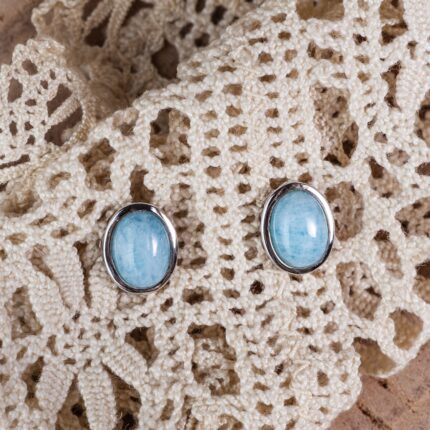
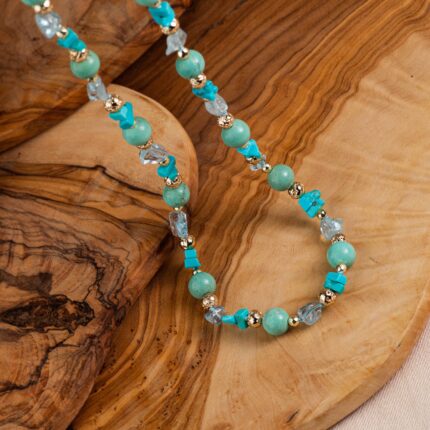
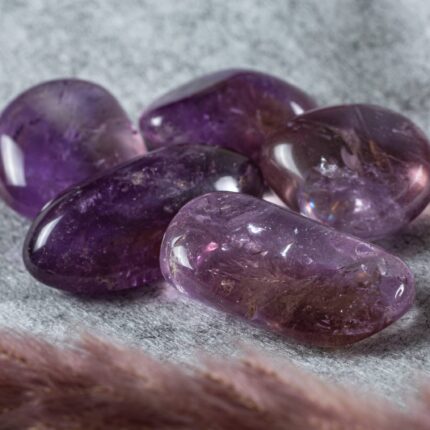
Aquamarine is prized for its soft sea-blue shades. A symbol of tranquillity and purity, this semi-precious stone brings calm, clarity and easier communication to everyday life. Our collection includes jewellery and crystals, each carefully chosen for its beauty and colour. Fall for the soothing energy of aquamarine.
By Price
Intention:
- Balance 18
- Communication 18
- Harmony 18
- Intuition 18
- Letting go 18
- Purification 18
- Soothing 18
- Spirituality 18
- Wisdom 18
Materials:
Showing all 18 results
Aquamarine Bracelet, 6mm
CHF 55 – CHF 59Price range: CHF 55 through CHF 59Aquamarine Bracelet, 8mm
CHF 90 – CHF 95Price range: CHF 90 through CHF 95Aquamarine Tumbled Stone
CHF 3 – CHF 9Price range: CHF 3 through CHF 9Discover our other gemstones
With its soft sea-blue shades, aquamarine has been linked to water and the oceans for thousands of years. Below, discover where it comes from, what it symbolises, its crystal healing properties and how to care for it.
Origin of Aquamarine
Aquamarine takes its name from the Latin aqua marina, meaning ‘sea water’. A variety of beryl, it is renowned for its blue to blue-green colour, reminiscent of clear seawater, and has been prized for millennia for its beauty and the properties attributed to it.
It forms in igneous and metamorphic rocks, mainly in granites and pegmatites, and usually grows as hexagonal crystals. The most famous deposits are in Brazil, particularly in Minas Gerais, but it is also found in Afghanistan, Pakistan, Russia, Nigeria, Zambia, Madagascar and the United States.
History and Symbolism of Aquamarine
With colours ranging from pale to deep blue and blue-green, aquamarine has been associated with water and the sea throughout history. The Sumerians are said to have linked it to water deities, believing it held protective and healing powers tied to the element of water. Aquamarine beads have been found alongside Egyptian mummies, and the ancient Greeks engraved it and carved it into intaglios.
In Jewish tradition, the High Priest wore a breastplate set with twelve stones, each engraved with the name of one of the twelve tribes of Israel. Aquamarine is thought to have been one of them.
Roman fishermen carried it as a talisman to ensure safe voyages and a good catch. In Christianity, it was associated with the apostle Saint Thomas, who travelled widely by sea. From the Middle Ages onwards, it became a symbol of marital happiness and fidelity, and it is still set in engagement rings today.
Crystal Healing Properties of Aquamarine
Aquamarine is valued in crystal healing for its soothing, purifying energy, and is closely associated with tranquillity and mental clarity.
Emotional Balance
-
Calming: Its gentle energy, like that of water, helps to soothe and cleanse turbulent emotions and brings emotional clarity. It also helps to reduce stress and ease fears.
-
Expression and Communication: Aquamarine is also used to improve communication, helping you express your feelings honestly and harmoniously, and let them go.
Physical Wellbeing
-
Throat and Breathing: Aquamarine is said to benefit the throat, airways and sinuses. It is also considered soothing for the eyes and may help with allergies and skin irritation. Its affinity with water is thought to support the lymphatic system too.
Spiritual Harmony
-
Inner Clarity: Aquamarine brings inner clarity, supports deep meditation and helps you align with your spiritual truth. By calming the emotions, it opens a connection with your higher self and encourages a lasting sense of inner peace.
Aquamarine and the Chakras
| Throat Chakra (Vishuddha) | Aquamarine is mainly associated with the throat chakra, which governs communication. It helps to release emotional blockages and encourages more authentic self-expression. |
| Third Eye Chakra (Ajna) | By stimulating the third eye chakra, it strengthens your connection with your intuition and supports mental clarity. |
Which Stones Go Well with Aquamarine?
Pairing aquamarine with other stones creates combinations that enhance and complement each other’s energies. Here are a few of our favourites.
-
Aquamarine & Amazonite: Amazonite is known for its soothing energy and its balancing effect on communication. Together, they encourage self-expression and harmonious relationships.
-
Aquamarine & Amethyst: Amethyst and aquamarine are often paired for their calming effects. Together, they bring mental clarity, emotional balance and spiritual depth.
-
Aquamarine & Labradorite: Labradorite is renowned for its protective qualities and its ability to open the mind. This pairing balances the emotions while strengthening intuition.
-
Aquamarine & Rose Quartz: Rose quartz is known for its gentle energy and its ability to bring harmony to relationships. Together, they nurture feelings of love and tenderness.
-
Aquamarine & Selenite: Selenite is known for its calming, purifying properties, which bring mental clarity and inner calm. Together, they support meditation and spiritual cleansing.
Caring for and Using Aquamarine
Cleansing and Recharging
Aquamarine readily absorbs the energies around it, so it’s important to cleanse it regularly.
Cleansing: Rinse it under cold water and leave it to air-dry. For a deeper cleanse, place it overnight on a quartz or amethyst cluster, or soak it in salt water.
Recharging: Leave aquamarine in direct sunlight for a few hours, ideally in the morning, or in the light of the full moon overnight. You can also place it on a Flower of Life.
Care
Cleaning: Clean your jewellery regularly with lukewarm water and a mild soap to remove any residue. Avoid chemical products.
Storage: Store your jewellery separately to prevent scratches, ideally in a fabric-lined pouch or a padded jewellery box.
Precautions: Take off your aquamarine jewellery for any activity where it might be knocked or come into contact with harsh chemicals.
Aquamarine in Jewellery
Aquamarine is highly prized in jewellery for its delicate hues and durability. The stones in our designs are hand-selected for their colour and quality. The most sought-after are the bluest and most transparent, with no visible inclusions. Our bracelets and necklaces are handcrafted in Geneva, and our other pieces are made in 925 sterling silver.
How to Use Aquamarine
Meditation: Bring aquamarine into your meditation sessions to deepen relaxation and clarity. Hold it in your hands or place it on your throat chakra to encourage communication and emotional release.
Decoration: At home, aquamarine brings a fresh, serene touch to any room. Display rough or polished pieces to create a soothing atmosphere.
Feng Shui and wellbeing: Place it in rooms associated with communication, such as the living room or study, to encourage good conversation and mutual understanding.
Mineralogy and Composition of Aquamarine
Aquamarine is a variety of beryl, one of the most prized and diverse mineral families in the world of gemstones. The beryl family also includes emerald, morganite and heliodor, each with its own distinctive colour.
| Group / family | Beryl |
| Chemical class | Silicate |
| Subclass | Cyclosilicate |
| Chemical formula | Be₃Al₂Si₆O₁₈ |
Formation
Aquamarine forms mainly in granitic pegmatites, where beryllium, aluminium, silicon and oxygen combine under specific conditions of temperature and pressure. Its crystals often grow alongside minerals such as quartz and feldspar.
| Main component | Beryllium aluminium silicate: Like all beryls, aquamarine is mainly composed of beryllium aluminium silicate. |
| Constituent elements | Beryllium (Be) |
| Aluminium (Al) | |
| Silicon (Si) | |
| Oxygen (O) | |
| Colouring element | Iron (Fe): Responsible for its typical blue to blue-green colour. |
Physical Properties of Aquamarine
| Hardness and Durability | Mohs scale: 7.5 to 8, making aquamarine highly scratch-resistant and ideal for everyday jewellery. |
| Refraction of Light | Refractive index: 1.577 to 1.583, which contributes to its glassy lustre and brilliance. |
| Birefringence: Low, and difficult to see with the naked eye without a polariscope or other gemmological tools. | |
| Density | Specific gravity: 2.68 to 2.74 g/cm³, making it relatively light compared to other gemstones. |
Transparency and Appearance
Transparency: Transparent to translucent, often with a clear, limpid appearance. The finest stones are free from visible inclusions, giving them exceptional purity.
Colour: From pale blue to deep blue and blue-green.
Aquamarine FAQs
👉 What are the benefits of wearing aquamarine jewellery?
Beyond its beauty, with shades from pale blue to blue-green that evoke the sea, aquamarine jewellery has plenty to offer. The stone is known for its soothing, calming energy, helping to reduce stress and bring mental clarity, energetic cleansing and spiritual growth. It is also said to support emotional release and communication, bringing harmony to your relationships. And with a hardness of 7.5 to 8 on the Mohs scale, it is strong and durable – a perfect choice for jewellery you’ll wear every day.
👉 What are the effects of aquamarine on health and wellbeing?
Traditionally regarded as a soothing stone, aquamarine helps to reduce stress and bring peace of mind. It also encourages clear, confident communication, helping to overcome a fear of public speaking and express your thoughts with ease. Physically, it is thought to support the respiratory system and help relieve allergies and sore throats. In crystal healing, it is used to balance the body’s energies and strengthen the immune system, bringing body and mind into harmony.
👉 What is the spiritual meaning of aquamarine?
Aquamarine has a rich spiritual meaning. Linked to water, it symbolises purification, clarity and serenity. It is used to calm the mind, support meditation and encourage honest, flowing communication, and is said to open and activate the throat chakra, helping you express your personal truth. Aquamarine is also considered a protective stone for travellers, especially at sea. It represents faithful love too, which is why it is often chosen for engagement rings.
👉 How can you bring aquamarine into your daily life?
It’s easy! Wear aquamarine jewellery – a pendant, bracelet or earrings – to keep its soothing, protective energy close to you. Place aquamarine crystals in your workspace or at home to create a calm, harmonious atmosphere. During meditation, hold it in your hand or place it on your throat chakra to support communication and mental clarity. You can also carry a small tumbled stone in your pocket or bag to enjoy its calming energy throughout the day.
👉 Which star signs are associated with aquamarine?
Aquamarine is associated with Pisces (19 February to 20 March) for its connection with water and its calming energy, bringing mental clarity and emotional balance – qualities this sign seeks. It is also linked to Aquarius (20 January to 18 February) and Gemini (21 May to 20 June) for its ability to encourage communication and self-expression. It is said to enhance intuition, reduce stress and encourage honesty.
👉 What is the difference between natural and treated aquamarine?
Natural aquamarine forms in the earth over a very long time, under specific geological conditions. It often has inclusions and colour variations ranging from pale blue to blue-green. Treated aquamarine, on the other hand, undergoes processes to improve its clarity and colour. Heat treatment is the most common, reducing greenish tints to produce a brighter blue. It doesn’t affect the stone’s durability, but it can lower its value for collectors. Other processes, such as filling or coating, are used to fill flaws and smooth the stone’s surface.