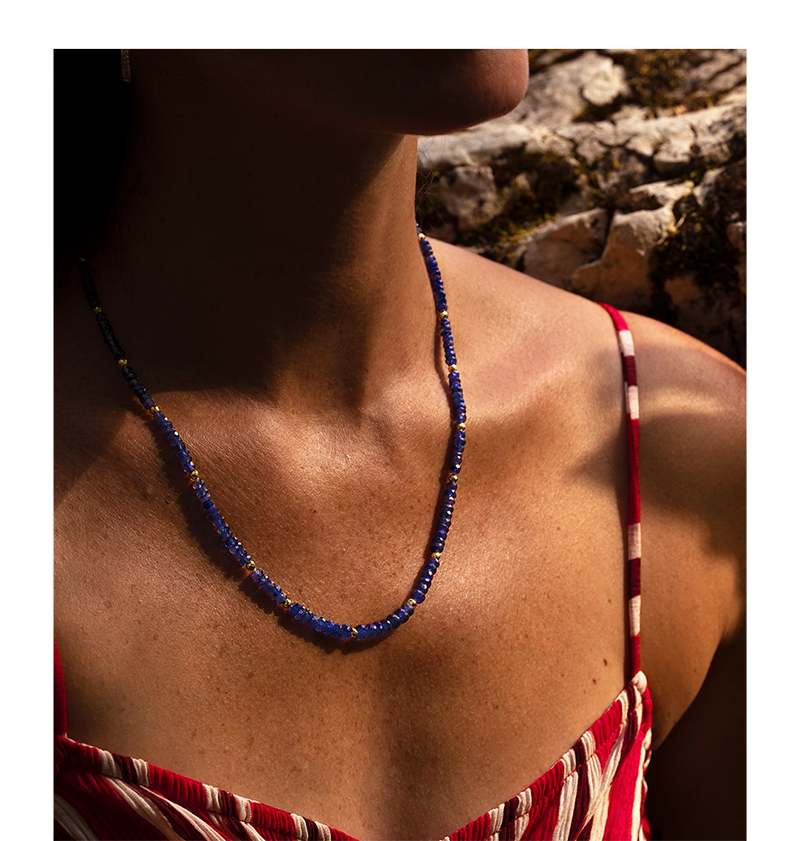
Agate Stones & Jewellery
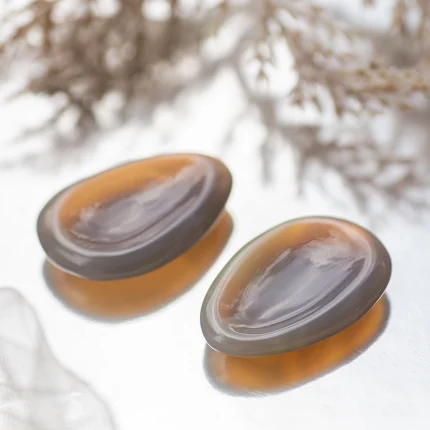
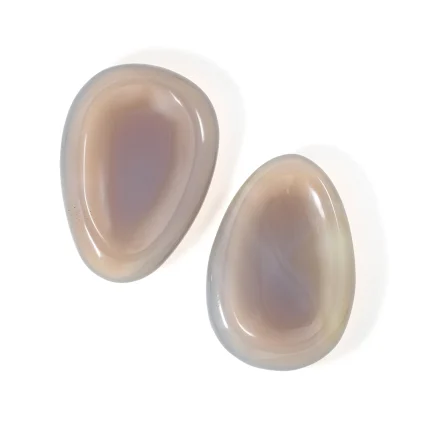
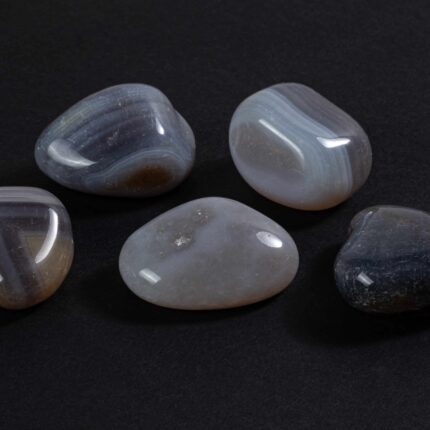
Welcome to our selection of agate. Tumbled stones, rough specimens, bracelets, pendants and earrings: every piece in our hand-picked collection is unique and shows off the beauty of this semi-precious stone. Prized for its protective qualities and calming energy, agate has been carved into amulets, seals and jewellery since ancient times.
By Price
Intention:
- Abundance 6
- Balance 20
- Calm 5
- Clarity 4
- Confidence 6
- Creativity 2
- Energy 7
- Focus 3
- Grounding 7
- Harmony 17
- Intuition 2
- Joy 6
- Letting go 8
- Luck 3
- Peace 14
- Positivity 5
- Purification 6
- Sleep 2
- Soothing 11
- Spirituality 6
- Strength 1
- Vitality 3
- Wisdom 2
Materials:
- Brass 15
- Natural gemstones 22
- Steel 5
Showing all 36 results
Botswana Agate Bracelet, 8mm
CHF 35 – CHF 39Price range: CHF 35 through CHF 39Moss Agate Bracelet, 6mm
CHF 20 – CHF 25Price range: CHF 20 through CHF 25Moss Agate Bracelet, 8mm
CHF 25 – CHF 29Price range: CHF 25 through CHF 29Moss Agate Bracelet, 10mm
CHF 29 – CHF 35Price range: CHF 29 through CHF 35Agate & Amethyst Pendant
CHF 45 – CHF 64Price range: CHF 45 through CHF 64Golden Agate & Amethyst Pendant
CHF 45 – CHF 64Price range: CHF 45 through CHF 64Agate & Citrine Pendant
CHF 45 – CHF 64Price range: CHF 45 through CHF 64Golden Agate & Citrine Pendant
CHF 45 – CHF 64Price range: CHF 45 through CHF 64Agate & Clear Quartz Pendant
CHF 45 – CHF 64Price range: CHF 45 through CHF 64Golden Agate & Clear Quartz Pendant
CHF 45 – CHF 64Price range: CHF 45 through CHF 64Golden Light-toned Agate & Clear Quartz Pendant
CHF 45 – CHF 64Price range: CHF 45 through CHF 64Discover our other gemstones
Origin and Varieties of Agate
Agate has fascinated people for thousands of years, from the amulets of ancient Egypt to the jewellery we craft today. Below, discover where it comes from, what it symbolises, its crystal healing properties and how to care for it.
Agate is a semi-precious stone formed by successive layers of silica deposited in the cavities of volcanic rock. It takes its name from the River Achates in Sicily, where it was first found in ancient times. Today, the main deposits are in Brazil, Uruguay, India, Madagascar, the United States, Germany and China.
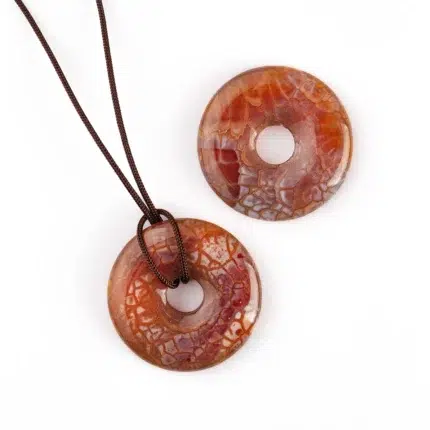
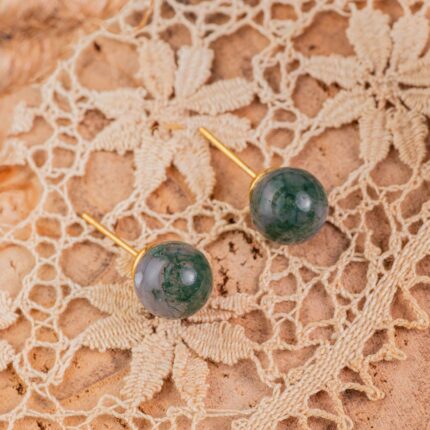
It comes in many varieties – banded, dendritic, fire agate and more – each with its own distinctive look. Among the best known are moss agate, with its green, plant-like patterns, and crazy lace agate, recognisable by its swirling bands of contrasting colours.
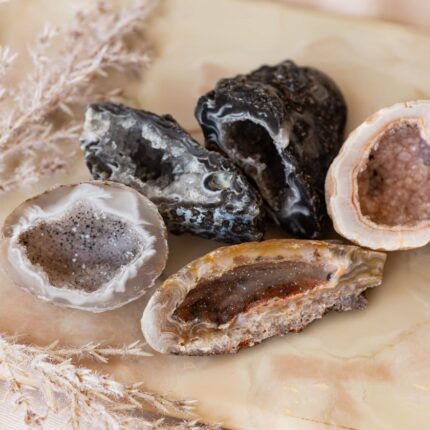
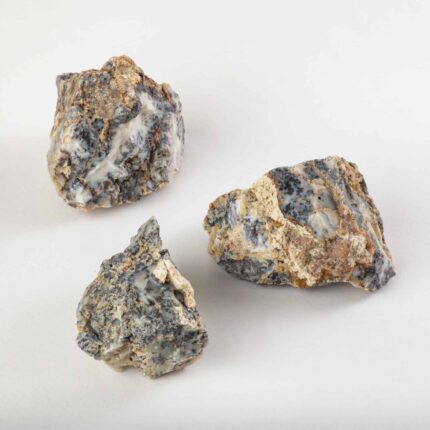
In its raw state, agate usually takes the form of rounded nodules or geodes: rough on the outside, smooth and glossy inside once cut and polished. Its colours vary enormously, from blue, green and red to yellow, beige and brown, often in distinct layers. This makes it a prized stone for jewellery, decorative objects and works of art.
History and Symbolism of Agate
With its vibrant colours and unique patterns, agate has played an important role in many cultures and eras, symbolising protection, healing and spirituality.
Agate has been valued for its virtues since ancient times. The Egyptians made it into amulets and seals, believing it brought protection and strength, and placed it in funerary jewellery to accompany the dead into the afterlife. The Greeks and Romans prized it for its protective properties, turning it into talismans and jewellery and carving it into cameos and intaglios. The Romans believed it could bring victory in battle and success in business.
In the Middle Ages, agate was thought to cure illness and protect against poisons and venom. Alchemists and healers used it in their work, and it often adorned religious objects for its spiritual properties.
In India, agate is considered sacred and features in religious rituals and ceremonies, where it is believed to balance energies and bring inner peace. Indian artisans also use it to create jewellery and works of art. In China, it is traditionally associated with longevity and prosperity, and is used in traditional medicine to balance chi (vital energy) and bring body and mind into harmony. It is also carved into ornaments believed to attract good fortune and protection.
Native American peoples made it into amulets and talismans, trusting in its healing and protective powers. It was also used in rituals to communicate with the spirit world and call upon visions.
In Islam, several hadiths (sayings of the Prophet) mention agate being worn as a ring. It is said to ward off poverty and misfortune and to cleanse the heart of hypocrisy. It is still prized today for making prayer beads.
Crystal Healing Properties of Agate
Agate is believed to have therapeutic properties and is widely used in crystal healing for its effects on emotional, physical and spiritual balance.
Emotional Balance
-
Soothing and Calming: Agate is known for its soothing energy. It helps to quieten the mind, ease fear and relieve stress. By bringing a sense of calm, it helps you handle negative emotions and avoid acting on impulse. It is also a valuable ally for anyone struggling to sleep.
-
Emotional Stability: By fostering a sense of security, it helps to balance the emotions and keep your mood steady – particularly helpful during times of change or emotional upheaval.
Physical Wellbeing
-
Regeneration and Healing: It is said to have regenerative properties, stimulating the body’s natural healing process and strengthening the immune system. It is believed to support tissue repair and recovery after illness or injury, and may be particularly helpful for acne.
-
Relaxation and Recovery: It is also said to relax the muscles and release tension, and can be used to soothe physical aches, especially those linked to stress.
Spiritual Harmony
-
Spiritual Connection: A grounding stone, agate helps to create a deep connection with the earth and the universe. It strengthens spiritual awareness and supports a deeper meditation practice.
-
Energetic Protection: Agate is often used to protect against negative and unwanted energies. It is said to form a protective shield around the aura, keeping harmful influences from disturbing your energetic balance.
Agate and the Chakras
| Agate Variety / Colour | Associated Chakra | Energetic Benefits |
|---|---|---|
| Black or Red Agate | Root (Muladhara) | Enhances stability and grounding, bringing a sense of security and strength. |
| Orange Agate | Sacral (Svadhisthana) | Stimulates creativity, passion and vitality while helping to balance the emotions. |
| Green Agate | Heart (Anahata) | Encourages love, compassion and forgiveness, helping to heal emotional wounds. |
| Light Blue Agate | Throat (Vishuddha) | Supports communication and self-expression, helping you speak your truth. |
| Dark Blue Agate | Third Eye (Ajna) | Stimulates intuition and brings a clearer understanding of yourself and the world. |
Which Stones Go Well with Agate?
Agate can be paired with other stones to enhance and strengthen their energies. To get the most out of them, choose crystals that complement one another – with agate, colour is a good guide. Here are a few of our favourite combinations.
-
Agate & Rose Quartz: Rose quartz is the stone of unconditional love and peace. Paired with agate, their gentle, harmonising energies encourage love for yourself and others, help to heal emotional wounds and open the heart to compassion and empathy.
-
Agate & Amethyst: Known for its calming and purifying properties, amethyst brings mental clarity and inner peace while protecting against negative energies. An ideal pairing for deepening your meditation and spiritual connection.
-
Agate & Citrine: Citrine is the stone of prosperity and positive energy. Together, they boost creativity, motivation and self-confidence, attracting abundance and success while dispelling negativity and encouraging an optimistic outlook.
-
Agate & Jade: Jade is a stone of purity and serenity. Combined with agate, it reinforces inner peace and emotional balance, supporting healing and wellbeing and bringing body and mind into harmony.
-
Agate & Tourmaline: Black tourmaline is renowned for its powerful grounding and protective properties. Paired with agate, it is ideal if you want to shield yourself from outside influences while cultivating inner balance.
Caring for and Using Agate
Cleansing and Recharging
Cleansing and recharging your stones regularly helps them keep their energy.
Cleansing: Rinse the stone under cold water and leave it to air-dry. For a deeper cleanse, place it overnight on a quartz or amethyst cluster, or on a bed of salt.
Recharging: Leave it overnight in moonlight or on a Flower of Life. It’s best to do this when the moon is waxing – or even better, when it’s full!
Care
Cleaning: Clean your agate jewellery and objects regularly with water and a mild soap. Use a soft brush on geodes to gently remove dust and residue. Avoid harsh chemical cleaners, which can damage the stone.
Knocks and scratches: Agate is a fairly hard stone, but harder materials can still scratch it. Store your agate jewellery separately from other gemstones and avoid hard knocks, which could cause cracks or chips.
Light and heat: Prolonged exposure to strong light or heat can fade agate’s colours, so keep your pieces out of direct sunlight when you’re not wearing them.
How to Use Agate
Meditation: Hold the stone in your hands or place it on a chakra and focus on your intention. Visualise its energy flowing into your energy field. Remember to cleanse your crystals before and after each use.
As jewellery: Wear agate bracelets and necklaces to enjoy its soothing, balancing energy while adding a beautiful finishing touch to your outfit. Pendants worn close to the heart are thought to enhance its calming, protective effects. Vividly coloured agates make great statement pieces, while softer shades combine beautifully with other stones.
Decoration: Geodes make stunning decorative pieces, bringing a natural, elegant touch to any room. You’ll find a selection of agate slices to display or hang on the wall in our shop at Balexert.
Feng Shui and wellbeing: Place pieces of agate in the corners of your home or office to encourage energetic balance and protection, and use tumbled or rough stones in your meditation space for clarity and harmony.
Mineralogy and Composition of Agate
Agate is a translucent, banded variety of chalcedony, itself part of the polycrystalline quartz family. Its patterns and colours are the result of water circulating as it formed, combined with mineral inclusions and impurities. Like quartz, it is mainly made of silicon dioxide, which gives it its hardness and durability.
| Group / family | Quartz |
| Subgroup | Polycrystalline quartz / Chalcedony |
| Chemical class | Silicate |
| Subclass | Tectosilicate |
| Chemical formula | SiO₂ (+ 1–10% impurities: Al₂O₃, Fe₂O₃, CaO, MgO, K₂O, Na₂O, H₂O, etc.) |
Formation
Agate forms in slightly acidic lava, inside cavities left by expanding gas bubbles. Silica-rich hydrothermal fluids seep into these cavities and crystallise in regular layers, whose colour depends on the type and amount of mineral salts present. While layers can vary in thickness, each one stays uniform throughout the nodule – and nodules can measure several metres across. When agate doesn’t completely fill the cavity, it forms a geode (or druse), often lined with quartz crystals such as amethyst, rock crystal (clear quartz) or smoky quartz.
| Main component | Silicon dioxide (SiO₂): Like quartz, agate is mainly composed of silicon dioxide, which gives it its hardness and strength. |
| Impurities and inclusions | Iron (Fe): Responsible for red, brown and yellow hues. |
| Manganese (Mn): Contributes to pinkish hues and black or brown dendritic patterns. | |
| Titanium (Ti): Influences blue or grey hues. | |
| Copper (Cu): Produces green or blue colours. | |
| Nickel (Ni): Can also produce green hues. | |
| Cobalt (Co): Can contribute to a range of colours when combined with other elements. | |
| Carbon (C): Found in some black or dark grey agates. |
Physical Properties of Agate
| Hardness and Strength | Mohs scale: Agate has a hardness of 6.5 to 7 on the Mohs scale, making it fairly durable.
Impact resistance: Although hard-wearing, agate can fracture under a strong impact due to its internal crystalline structure. |
| Refraction of Light | Refractive index: Its refractive index ranges from 1.530 to 1.540, which affects the way light passes through the stone and contributes to its lustre. |
| Birefringence: Agate has low birefringence, meaning it shows no noticeable double refraction. Light passes through the stone fairly evenly. | |
| Density | Specific gravity: Its density ranges from 2.58 to 2.64 g/cm³, similar to that of quartz – which is why it feels pleasantly weighty in the hand. |
Transparency and Appearance
Transparency: Agate ranges from translucent to opaque, depending on the purity of the silica and the inclusions it contains.
Colours and patterns: Agate is known for its coloured bands and varied patterns – concentric, dendritic or moss-like – shaped by the conditions in which it formed and by mineral impurities.
Agate FAQs
👉 What are the benefits of agate?
Agate is known for its soothing energy: it calms the mind, eases fear and relieves stress. By fostering a sense of security and stability, it helps to balance the emotions, making it especially helpful during times of change or for anyone struggling to sleep. As a grounding stone, it also protects against negative energies. It is said to have regenerative properties too, supporting the healing process and the immune system, helping with acne, relaxing the muscles and relieving tension.
👉 What colour is agate?
Agate comes in a wide range of colours, from white to black, through blue, green, red, yellow, brown and pink. It is often recognisable by its distinctive multicoloured bands, which form naturally over time, and each variety has its own unique patterns. Crazy lace agate is probably the most colourful, with bright yellows, reds, greys and blacks. Moss agate and dendritic agate feature green-toned inclusions that resemble landscapes or plants, while Botswana agate displays subtle brown and beige bands.
👉 Which chakra is agate associated with?
Agate is a versatile stone linked to different chakras depending on its colour, and is generally considered a balancing stone for all of them. Red and black agates are connected to the root chakra, for grounding and stability. Orange varieties balance the sacral chakra, bringing vitality and creativity. Green moss agate is associated with the heart chakra, encouraging love and compassion. Light blue agate is linked to the throat chakra, supporting communication and self-expression, while darker blues are associated with the third eye, enhancing intuition and clairvoyance.
👉 How should you wear agate?
Jewellery is one of the most popular ways to enjoy agate’s soothing, balancing properties, whether as a bracelet, necklace or pendant. For the best effect, wear it close to the body, ideally against the skin – a pendant at heart level or a bracelet on the wrist works particularly well. You can also keep a tumbled stone in your pocket or bag to carry its energy with you throughout the day. When meditating, hold your stones in your hand or place them on the chakra you want to work on.
👉 How can you tell if an agate is genuine?
A genuine agate has irregular, varied bands of colour, often with unique patterns and mineral inclusions. Its surface is generally smooth, with a glassy or waxy lustre. It feels cool to the touch, even in warm weather, and surprisingly heavy for its size. A magnifying glass can reveal its internal crystalline structure. Imitations, on the other hand, are often made of plastic or tinted glass, with uniform, artificial-looking colours. Note that some agates are dyed for aesthetic reasons – these tend to have bright, even colours.
👉 Where should you place an agate?
Whether as a tumbled stone, a slice or a geode, agate brings harmony and calm to your home or workplace. Place it by the front door to protect against negative energies, or in the living room to encourage communication and relaxation. In the bedroom, it can help quieten the mind and promote restful sleep, while in the office it supports focus and mental clarity, creating a space that’s more conducive to work and creativity.
👉 How do you cleanse agate?
To cleanse your agate, run it under cold water for a few minutes or place it on a bed of dry sea salt or a selenite Flower of Life for several hours. To recharge it, leave it in moonlight overnight. Another option, especially after long use, is to bury it in the earth for a few days. To clean an agate stone or piece of jewellery, simply rinse it in lukewarm water with a mild soap and dry it with a soft cloth, avoiding harsh chemicals or abrasive cleaners that could damage the surface.
👉 How much does agate cost?
The price of agate varies widely depending on its quality, size and rarity. Small or rough pieces can cost just a few Swiss francs, while larger polished stones or those with unusual patterns can cost several tens of francs. Exceptionally rare pieces with outstanding colours or patterns can reach several hundred francs. Jewellery can be more expensive, particularly finely crafted pieces set in precious metals – but there’s agate to suit every budget.