
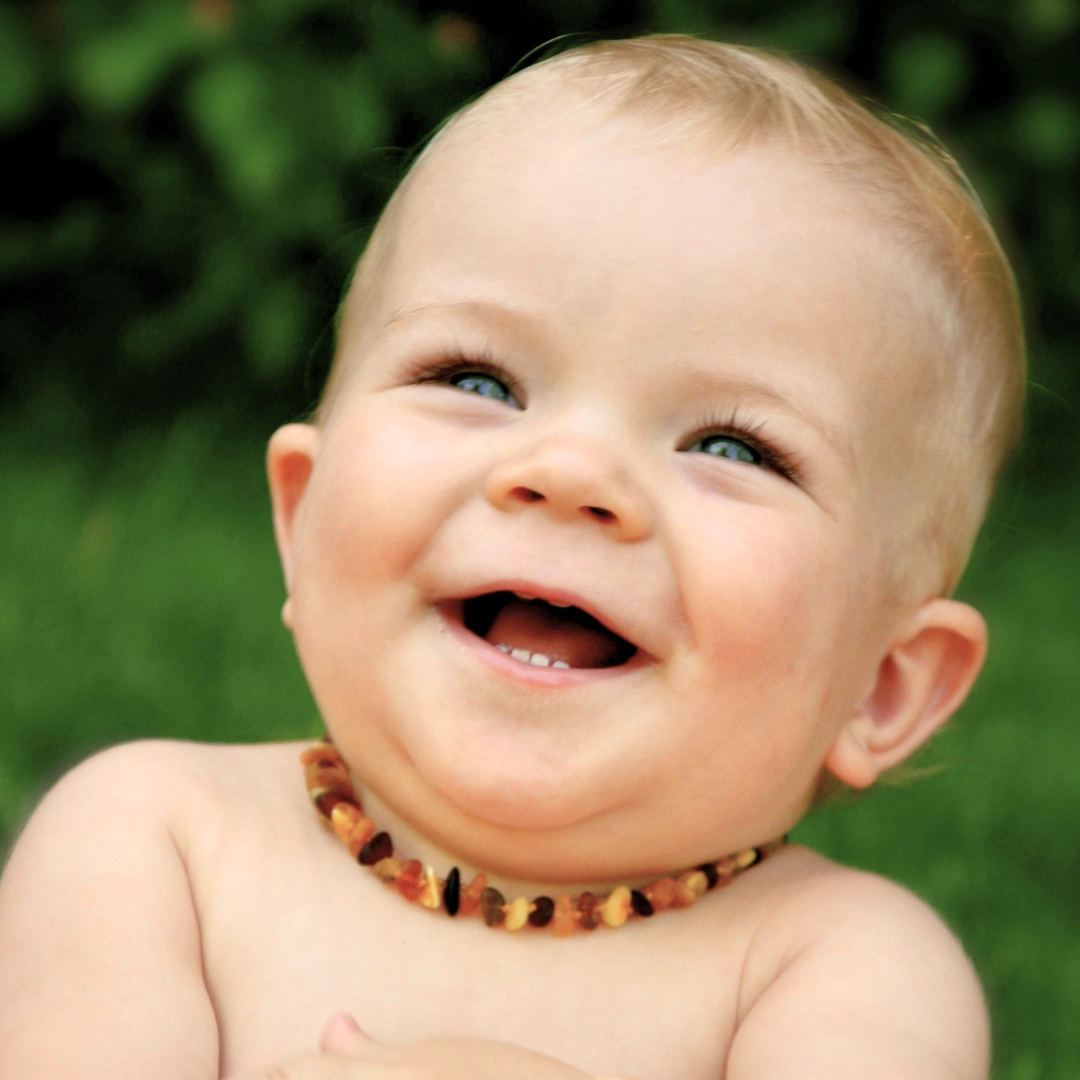
Is your baby teething and are you looking for a natural way to ease their discomfort? Amber necklaces are often touted as an effective remedy for teething pain. But do they really work? Are they safe?
Before you make a decision, you should be clear about their origin, their claimed benefits and the precautions you need to take. Here you’ll find everything you need to know to make an informed decision.
What is an amber necklace for babies?
An amber necklace for babies is an accessory made up of small beads of amber, a fossilised resin. It is often used for its purported beneficial effects on the health and wellbeing of young children.
📜 Origins and tradition
Amber has been used in homeopathy and chiropractic for centuries. It is said to have calming and soothing properties. Amber necklaces are particularly popular in Eastern Europe and Germany.
🍯 Why amber?
Amber contains succinic acid, a natural substance that is said to be released on contact with the skin. According to some sources, this substance is thought to help relieve pain and irritability, particularly during the teething phase.
🔧 Manufacturing and quality
Amber necklaces are made from polished or raw beads. Each bead is individually knotted to prevent any risk of swallowing should the necklace break.
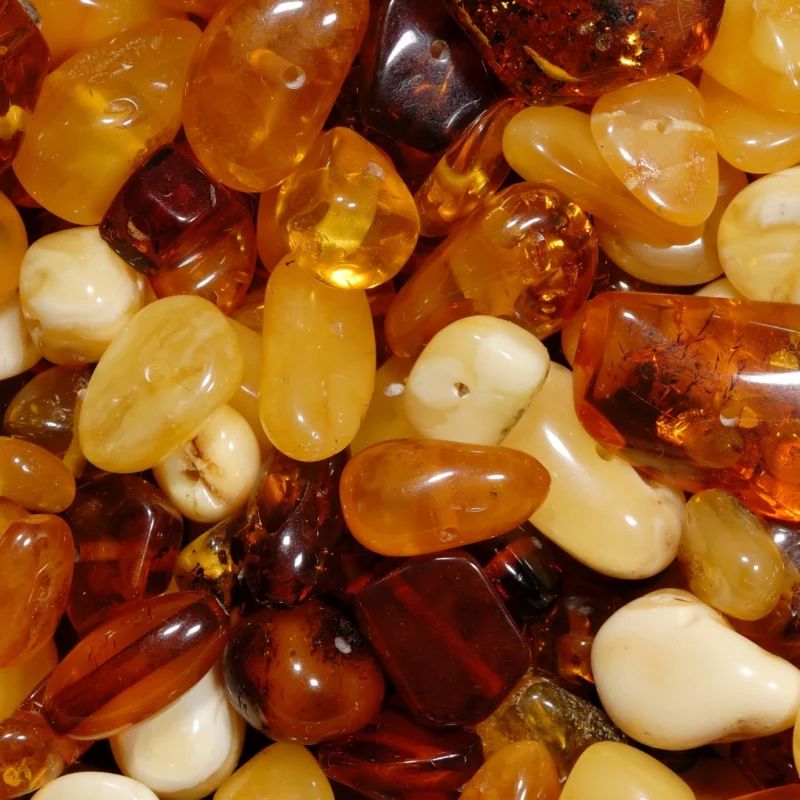
- Raw amber: natural, matt appearance
- Polished amber: a soft, glossy appearance
- Secure fastening: usually with a screw or clip
It is extremely important to choose a high-quality collar to ensure the baby’s safety.

The alleged benefits of amber necklaces for babies
Amber necklaces are often used for their supposed health benefits for babies. Many parents use them to relieve certain ailments, particularly during teething.
A natural remedy for toothache
Teething can be a difficult time for a baby. Many parents look for ways to soothe their child’s irritability and crying. Amber necklaces are often touted as a natural alternative to gels and teething rings.
Amber is said to have anti-inflammatory properties which are believed to help relieve pain. Some believe that when it comes into contact with the skin, succinic acid is released – a compound said to have a soothing effect.
An accessory that combines fashion and tradition
Apart from its alleged positive effects on well-being, the amber necklace is also a popular accessory because of its aesthetic appeal. It is available in a variety of colours and shapes, making it a piece of jewellery that is as practical as it is elegant.
In some cultures, it is an age-old tradition to give a baby an amber necklace. It symbolises protection and a sense of security, much like a lucky charm.
A natural and authentic material
Amber is a fossilised resin that has been used for centuries for its purported beneficial properties. As it occurs naturally, it is a highly sought-after material. In baby care, it is often preferred to chemical products.
It is important to choose a high-quality necklace made up of beads that fit snugly and a secure clasp. This ensures it is safer for the child to wear.
🔬What does science say about the effectiveness of amber?
Amber necklaces are popular for soothing babies during teething. But what does the science say? Many parents claim that these accessories relieve pain and irritability. However, scientific studies on the subject are still few and far between.
The myth of succinic acid
Some people believe that amber contains succinic acid, which is said to have a soothing and anti-inflammatory effect. The idea is that the warmth of the skin releases this substance, which then penetrates the body.
However, there are no studies to show that succinic acid can be absorbed through the skin in sufficient quantities to have a pain-relieving effect. Furthermore, tests show that amber does not release succinic acid at body temperature.
A placebo effect?
Parents who notice an improvement in their baby’s condition may be influenced by a placebo effect. In other words, they perceive an improvement because they believe in the soothing effect of the necklace. Furthermore, the intensity of teething naturally varies.
⚠️ Safety: Risks and precautions to take
A necklace around a baby’s neck can pose various risks:
- Risk of suffocation: A baby may become entangled in their necklace whilst sleeping or playing.
- Risk of choking: If the chain breaks, the beads may be swallowed.
- Skin irritation: Some babies have sensitive skin and may react to contact with amber.
Precautions to be observed
To minimise the risks, you should take the following precautions:
- Choosing the right necklace: it should be short so that it doesn’t get caught on anything.
- Checking the quality: A good necklace must have a knot between each bead so that the beads do not scatter if the necklace breaks.
- Do not let your baby sleep in it: it is better to take it off during naps and at night.
- Looking after your baby: Never leave a baby wearing this necklace unattended.
- Why not choose a bracelet: a safer alternative to a necklace.
What do healthcare professionals have to say about this?
Paediatricians and child protection organisations often advise against the use of amber necklaces. They point out that the risk of strangulation and suffocation is very real. To relieve teething discomfort, they recommend alternatives such as teething rings or massaging the gums.

📏 Comparing the different types of amber necklaces
Sizes and shapes of pearls
Amber necklaces for babies are available with beads in various sizes and shapes. These differences affect how comfortable they are to wear, their style and even their supposed effectiveness.
The most common forms are:
- Round beads: They are soft and comfortable to wear, and prevent chafing against the skin.
- Baroque pearls: Irregular, more natural shapes that give them an authentic look.
- Flat beads: They lie more flush against the skin and are barely visible under clothing.
The size of the beads also varies:
- Small beads (4–6 mm): Lightweight, suitable for young children.
- Medium-sized pearls (6–8 mm): A good balance between aesthetics and comfort.
- Large beads (8 mm and larger): They are more eye-catching, but are sometimes less comfortable.
The choice depends on the level of comfort and the style you are looking for. Smaller pearls are often preferred because they are discreet and lightweight.
Colours and origin of amber
The amber used in baby necklaces comes mainly from the Baltic region. It is prized for its purported health benefits and its calming effect.
Colours vary and may influence your choice:
| Colour | Features |
| Honey | The most popular colour – warm and natural. |
| Cognac | A darker shade, with an elegant and traditional look. |
| Butter | Pale yellow, with a delicate and rare appearance. |
| Green | A rare, unique and original colour. |
| Black | Elegant and mysterious, it is often associated with protection. |
Every colour is natural and depends on the impurities and the conditions under which the amber was formed. Some people believe that lighter shades contain more succinic acid, but there is no scientific evidence to support this.
The choice of colour is often a matter of taste and style. Some parents prefer soft, natural shades, whilst others opt for darker colours to create a stronger effect.
Tips for making an informed purchase
Choosing an amber necklace for your baby requires a bit of care. There are several factors you should bear in mind to ensure the safety, quality and effectiveness of the jewellery. Here are a few tips to help you make the right choice.
Checking the authenticity of amber
A genuine amber necklace must be made from natural amber. Some sellers offer imitations made from plastic or resin. Here’s how to spot fakes:
- Try the salt test: dip a bead into salt water (water with plenty of salt in it). Amber floats, whilst plastic sinks.
- Rub a bead against a piece of cloth: genuine amber may give off a faint smell of heated resin.
- It is best to choose specialist and certified providers.
Choosing a safe collar
Safety is the top priority. A poorly designed neckband can be dangerous for a baby. You should check the following points:
- A clip-on or screw-on cap that opens easily when pulled.
- There is a knot between each bead to prevent the beads from scattering if the necklace breaks.
- An appropriate length: between 30 and 35 cm, to avoid any risk of strangulation.
Choose high-quality craftsmanship
A good amber necklace is carefully crafted. It must be polished to prevent skin irritation in babies. Handcrafted pieces are often more reliable. Also pay attention to the origin of the amber: Baltic amber is renowned for its quality and its soothing properties.
Look after the baby’s wellbeing
A necklace that is too tight or too heavy may bother your baby. It’s best to choose a lightweight and flexible design. You could also opt for a bracelet if you’re concerned that a necklace might not be suitable.
Avoid unusual styles
Some necklaces are decorated with glass or plastic beads for aesthetic reasons. These elements have no beneficial effect whatsoever and may impair the effectiveness of the amber necklace. A necklace made from 100 per cent natural amber is preferable.
Caring for your necklace
To ensure that an amber necklace retains its properties, it must be looked after regularly:
- Clean it with lukewarm water without soap.
- Avoid spending long periods in the sun or in the heat.
- Take it off when you have a bath so that it doesn’t lose its shine.


