

Carnelian Keyring
CHF 19
A natural stone set on a keyring, so your favourite crystal goes wherever you go.
100% natural stone · Sold individually · Delivery to Switzerland & Europe
- Carnelian is a hard, hard-wearing stone, but a sharp knock can still chip it. Take your jewellery off before sport or any physical activity.
- Water won’t harm carnelian, so you can rinse it briefly to cleanse it.
- Take your jewellery off before swimming in the pool or the sea, as chlorine and salt can damage both the stones and the jewellery.
- Keep it away from harsh chemicals such as detergents and household cleaners, which can damage the stone.
- Keep your jewellery somewhere dry, away from direct light and heat.
- There are several ways to cleanse and recharge your stones. Find out more in our guide: how to cleanse and care for your crystals
Standard delivery or recorded delivery.
Click & Collect
Available within 1 to 2 working days.
- Cornavin Shop
- Balexert Shop
Delivery within Europe
CHF 10.- for delivery within Europe, excluding Switzerland.
For further information, please see our terms and conditions for delivery terms.
Back
Return period: 14 days.
Product information
| Colours | Golden, Silver-coloured |
|---|---|
| Symbol | Courage, Creativity, Energy |
Carnelian Keyring
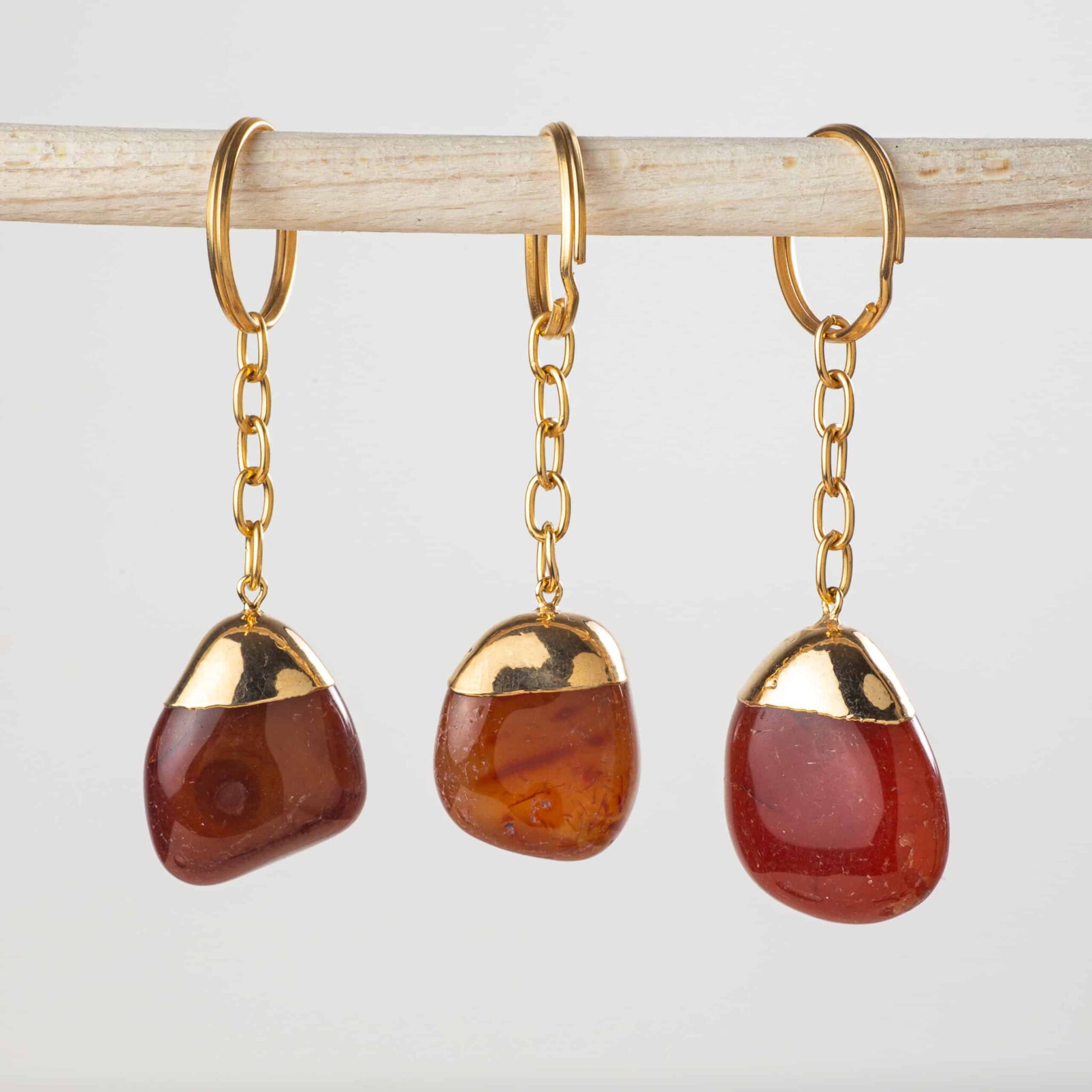
A polished natural stone set on a steel keyring, available in a silver-tone or gold-plated finish – a small piece of the mineral world to carry with you every day, on your keys or attached to your bag. As each stone is natural, its colours and patterns vary slightly from one keyring to the next, so no two are exactly alike. A thoughtful little gift, too.
Stone: approx. 2–3.5 cm · Total length: approx. 6 cm
About carnelian
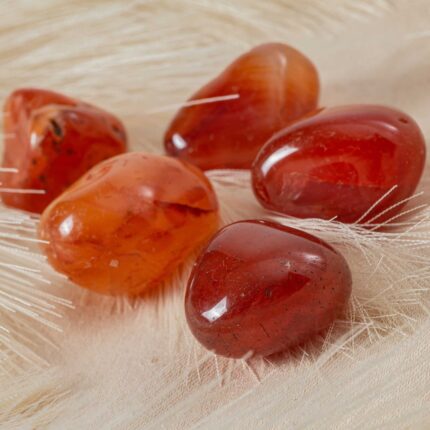
Carnelian is a variety of chalcedony, a microcrystalline quartz, whose colour ranges from pale orange to deep reddish-brown thanks to iron oxide. Its name is thought to come from the Latin cornum, the cornel cherry. Carnelian was one of the most popular stones of the ancient world: in Mesopotamia and Egypt it was carved into seals, scarabs and amulets. Main deposits: India, Brazil and Uruguay.
Similar products you might like